
Ads
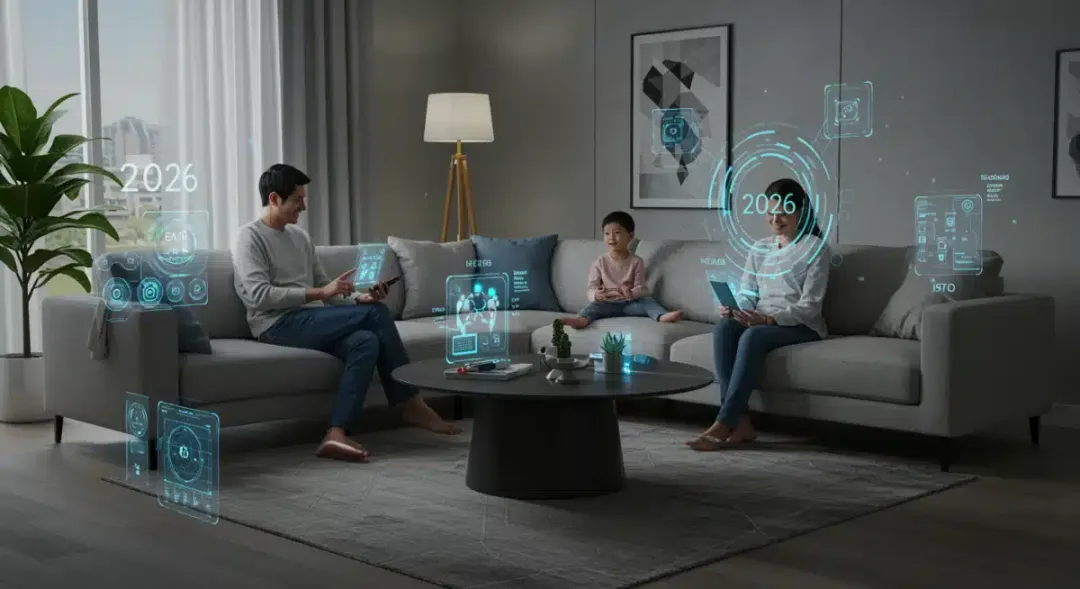
By 2026, AI assistants will offer significantly enhanced personalization, proactive assistance, and seamless integration across smart ecosystems, transforming daily interactions and digital experiences for users nationwide.
The digital landscape is constantly evolving, and at its forefront are artificial intelligence assistants. By 2026, The Rise of AI Assistants: Exploring the Capabilities of Google Assistant and Amazon Alexa in 2026 will have profoundly reshaped how we interact with technology and manage our daily lives, moving beyond simple voice commands to truly intelligent partnerships.
The Evolution of AI Assistants: From Basic Commands to Intelligent Companions
The journey of AI assistants, from rudimentary voice command systems to sophisticated intelligent companions, has been nothing short of remarkable. What began as simple task executors has quickly evolved into complex systems capable of understanding context, learning user preferences, and even anticipating needs.
Early AI assistants, while groundbreaking, were largely reactive. Users had to issue precise commands, and the systems would respond with pre-programmed actions. This era laid the groundwork for the more advanced capabilities we see emerging today and expect to dominate by 2026.
Understanding the Historical Trajectory
- Early 2010s: Introduction of basic voice recognition and command execution.
- Mid-2010s: Integration with smart home devices, expanding control over connected ecosystems.
- Late 2010s: Enhanced natural language processing (NLP) and machine learning (ML) capabilities.
The transition from a command-response model to a truly conversational interface marks a significant leap. This shift is driven by advancements in deep learning, allowing AI to process and understand human language with unprecedented accuracy and nuance. The ability to engage in more fluid, less structured conversations has made these assistants far more accessible and user-friendly.
By 2026, this evolution will culminate in AI assistants that are not just tools but integral parts of our daily routines, offering personalized experiences that adapt and grow with us. They will move beyond functional utility to become companions that understand our habits, preferences, and even our moods.
The continuous development in areas like contextual awareness and predictive analytics is pushing AI assistants into a new realm of intelligence. This means they can offer more relevant information and proactive suggestions, fundamentally changing our interaction paradigms.
Google Assistant in 2026: A Deeper Dive into Proactive Intelligence

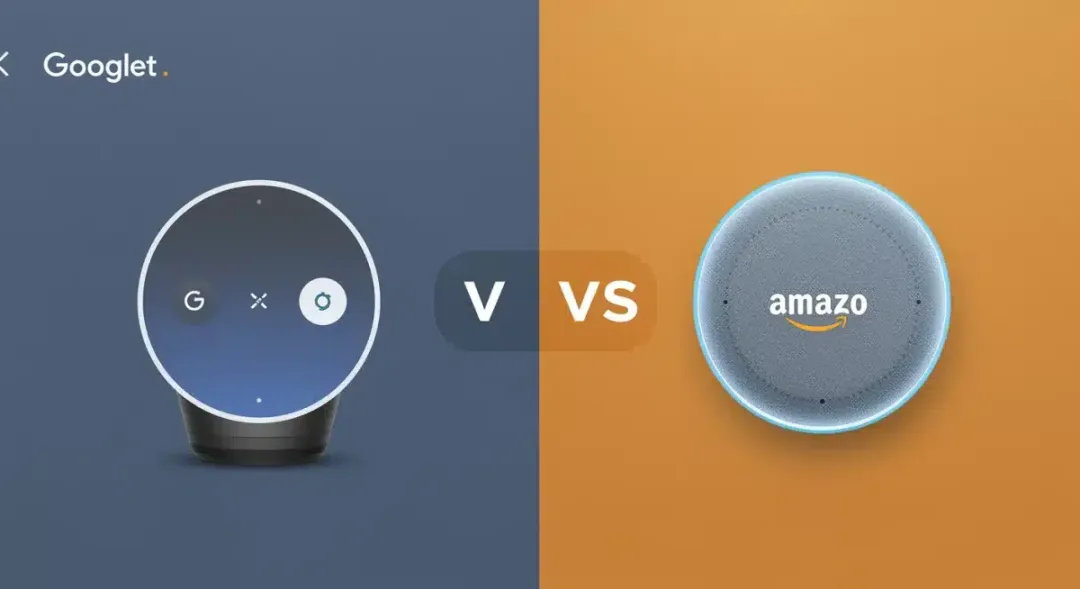
Google Assistant, already a powerhouse in the AI assistant landscape, is set to significantly enhance its proactive intelligence by 2026. This means moving beyond merely responding to queries to actively anticipating user needs and offering solutions before being asked.
Imagine your assistant not just telling you the weather but suggesting an umbrella based on your calendar and the likelihood of rain during your commute. This level of foresight will be a hallmark of Google Assistant’s capabilities in the near future.
Anticipatory Assistance and Contextual Understanding
- Proactive Scheduling: Automatically suggesting optimal times for appointments based on traffic and personal preferences.
- Personalized Content Curation: Delivering news, podcasts, or entertainment tailored to your current mood or activity.
- Predictive Maintenance: Alerting you to potential issues with smart home devices before they fail.
Google’s vast ecosystem of data, combined with cutting-edge machine learning algorithms, positions it uniquely to deliver this level of anticipatory assistance. The integration across various Google services, from Calendar to Maps and Search, will allow the Assistant to draw on a rich tapestry of information to provide highly relevant and timely interventions.
Furthermore, improvements in natural language understanding will enable the Assistant to grasp complex, multi-turn conversations, making interactions feel more human-like and less like talking to a machine. This will be crucial for handling intricate tasks and providing nuanced support.
The focus on proactive intelligence will transform Google Assistant from a helpful tool into an indispensable personal organizer and digital guide, seamlessly integrating into all aspects of daily life and enhancing productivity and convenience.
Amazon Alexa in 2026: Enhancing Personalization and Emotional Intelligence
Amazon Alexa, a frontrunner in the smart home arena, is poised to make significant strides in personalization and emotional intelligence by 2026. This evolution will allow Alexa to not only understand what you say but also how you feel, adapting its responses and suggestions accordingly.
The goal is to create a more empathetic and intuitive interaction, making Alexa feel less like a digital assistant and more like a trusted confidante. This will be achieved through advanced voice tone analysis and a deeper understanding of user patterns.
Adaptive Personalization and Empathetic Interactions
- Mood-Aware Responses: Adjusting tone and suggestions based on detected emotional cues in your voice.
- Personalized Routine Automation: Creating dynamic routines that adapt to your daily habits and unexpected changes.
- Enhanced Learning Capabilities: Remembering specific preferences and quirks for each family member.
Amazon’s extensive experience with consumer behavior through its e-commerce platform provides a unique advantage in developing highly personalized experiences. Alexa will leverage this data, alongside advanced AI, to offer recommendations and assistance that truly resonate with individual users.
The integration of emotional intelligence will extend beyond mere conversational nuances. It will enable Alexa to offer more supportive interactions, such as playing calming music when stress is detected or suggesting uplifting content during challenging times. This adds a layer of genuine companionship to the digital assistant.
By 2026, Alexa will evolve into a highly personalized and emotionally intelligent assistant, capable of understanding and adapting to the unique needs and feelings of each user, thereby fostering a deeper and more meaningful connection.
Seamless Integration: The Smart Home and Beyond by 2026
The vision for 2026 sees AI assistants like Google Assistant and Amazon Alexa achieving unprecedented levels of seamless integration, not just within the smart home but across all facets of our digital and physical lives. This means a truly interconnected ecosystem where devices communicate effortlessly.
The fragmentation often experienced with current smart home setups will largely be a thing of the past. Instead, a unified, intelligent network will manage everything from lighting and climate to security and entertainment, all orchestrated by your AI assistant.
Unified Ecosystems and Interoperability
- Universal Device Control: Managing all smart devices from a single, intuitive interface or voice command.
- Cross-Platform Compatibility: Ensuring smooth operation between devices from different manufacturers.
- Contextual Automation: Automating home functions based on occupancy, time of day, and external events.
Beyond the home, this integration will extend to vehicles, workplaces, and even public spaces. Your AI assistant will act as a consistent interface, providing continuity in your digital experience wherever you go. This level of pervasive intelligence promises a future of unparalleled convenience.
The underlying technology for this seamless integration will rely heavily on advanced cloud computing, edge AI, and robust communication protocols. These advancements will ensure that interactions are instantaneous and reliable, regardless of the complexity of the task.
By 2026, the seamless integration of AI assistants will create environments that are not just smart, but truly intelligent, anticipating needs and managing complexities with minimal user intervention, making daily life significantly more efficient and enjoyable.
Data Privacy and Security: Addressing Concerns in an AI-Driven World

As AI assistants become more deeply embedded in our lives, the concerns surrounding data privacy and security grow proportionally. By 2026, addressing these concerns will be paramount, with both Google and Amazon implementing advanced measures to protect user information.
The sheer volume of data processed by these assistants, from voice commands to personal preferences and daily routines, necessitates robust safeguards. Users need assurances that their private information is secure and not misused.
Enhanced Privacy Protocols and User Control
- End-to-End Encryption: Securing all voice commands and data transmissions from interception.
- Granular Privacy Settings: Allowing users precise control over what data is collected and how it’s used.
- Anonymized Data Processing: Utilizing techniques to strip personal identifiers from data used for AI training.
Both companies are investing heavily in technologies like federated learning, which allows AI models to learn from decentralized data without directly accessing individual user data. This approach significantly enhances privacy while still allowing for model improvement.
Transparency will also be a key focus. Users will have clearer insights into how their data is being used and the ability to easily manage or delete their personal information. This empowers individuals to make informed decisions about their digital footprint.
By 2026, the focus on data privacy and security will be a defining characteristic of AI assistants, building trust and ensuring that the benefits of personalized AI do not come at the cost of personal information security.
The Future Landscape: Beyond 2026 and Emerging Trends
Looking beyond 2026, the future landscape of AI assistants promises even more transformative changes. While current advancements focus on proactive and personalized assistance, the next phase will explore new frontiers in human-computer interaction and AI capabilities.
We can anticipate a future where AI assistants become even more integrated into our physical environment, moving towards ubiquitous computing where the AI is ambient and contextually aware without requiring explicit commands.
New Frontiers and Transformative Technologies
- Multimodal Interactions: Combining voice, gesture, and even thought-based interfaces for seamless control.
- Hyper-Personalization: AI assistants that adapt to individual cognitive styles and learning patterns.
- Ethical AI Development: Increased focus on fairness, accountability, and transparency in AI algorithms.
The development of more sophisticated AI models will lead to assistants capable of handling incredibly complex tasks, such as managing intricate projects or even providing personalized educational experiences. The boundaries of what AI can achieve will continue to expand.
Furthermore, the convergence of AI assistants with augmented reality (AR) and virtual reality (VR) technologies will create immersive experiences where digital assistance blends seamlessly with the physical world, offering new ways to interact and access information.
The post-2026 era for AI assistants will be characterized by a continuous push towards more intelligent, intuitive, and ethically responsible systems, ultimately redefining the relationship between humans and artificial intelligence.
Challenges and Opportunities in the AI Assistant Market
The rapid growth and evolution of AI assistants, while promising, also present a unique set of challenges and opportunities for both developers and consumers. Navigating this complex landscape requires a keen understanding of technological, ethical, and market dynamics.
One primary challenge is ensuring equitable access to these advanced technologies, preventing a digital divide where only certain segments of the population can fully benefit. Another is managing the expectations surrounding AI capabilities.
Key Challenges and Growth Opportunities
- Interoperability Standards: Developing universal protocols for seamless communication between diverse devices and platforms.
- User Adoption and Trust: Building confidence in AI’s reliability and data security among a broad user base.
- Ethical AI Governance: Establishing clear guidelines for the responsible development and deployment of AI assistants.
On the opportunities side, the potential for AI assistants to revolutionize industries is immense. From healthcare to education, and from retail to transportation, AI can streamline operations, enhance customer service, and personalize experiences on an unprecedented scale.
The development of specialized AI assistants tailored to specific professional fields also represents a significant growth area. These niche applications can provide highly targeted support and expertise, boosting productivity in various sectors.
Ultimately, the challenges in the AI assistant market are matched by equally compelling opportunities, driving continuous innovation and shaping a future where AI plays an increasingly vital and beneficial role in society.
| Key Aspect | Description in 2026 |
|---|---|
| Proactive Assistance | AI assistants anticipate needs and offer solutions before explicit requests, based on learned patterns and contextual data. |
| Emotional Intelligence | Assistants detect user emotions through voice and interaction, adapting responses for more empathetic and personalized support. |
| Seamless Integration | Unified control over smart home devices and cross-platform compatibility, extending to vehicles and other environments. |
| Data Privacy Focus | Enhanced security measures, granular user controls, and transparent data handling are central to building trust. |
Frequently Asked Questions About AI Assistants in 2026
How will AI assistants like Google Assistant and Alexa become more proactive by 2026?▼By 2026, AI assistants will leverage advanced machine learning and contextual data to anticipate user needs. They will proactively suggest tasks, manage schedules, and offer relevant information without explicit prompts, based on learned patterns and real-time environmental factors.
What advancements can we expect in the emotional intelligence of AI assistants?▼Emotional intelligence in AI assistants will improve through sophisticated voice tone analysis and complex language processing. This will enable them to detect user moods and adapt their responses, offering more empathetic and supportive interactions that feel genuinely personalized.
How will data privacy and security evolve for AI assistants in the coming years?▼Data privacy will see significant enhancements, including end-to-end encryption for all communications and more granular user controls over data collection. Companies will also implement anonymized data processing and federated learning to protect personal information while improving AI models.
Will AI assistants achieve seamless integration across all smart devices by 2026?▼Yes, significant progress towards seamless integration is expected. AI assistants will provide unified control over a wider range of smart home devices and cross-platform compatibility. This will extend their reach beyond the home, offering consistent digital assistance in cars and workplaces.
What new types of interactions can we expect with AI assistants beyond 2026?▼Beyond 2026, new interactions could include multimodal interfaces combining voice, gestures, and even thought. Hyper-personalization will adapt to individual cognitive styles, and integration with AR/VR will create immersive experiences where AI assistance is ambient and contextually aware.
Conclusion
The journey of AI assistants, particularly Google Assistant and Amazon Alexa, toward 2026 is one of profound transformation. From their foundational roles as basic command processors, they are rapidly evolving into sophisticated, proactive, and emotionally intelligent companions. This evolution promises not only enhanced convenience and efficiency in daily life but also a deeper, more intuitive interaction with technology. As these systems become seamlessly integrated across our smart homes, vehicles, and personal devices, addressing critical concerns around data privacy and security will remain paramount. The future of AI assistants points towards an era where technology truly anticipates our needs, understands our nuances, and empowers us in ways previously imagined only in science fiction, continually pushing the boundaries of human-computer interaction.