

Ads
Securing new federal grants for small businesses requires a thorough understanding of current application deadlines and specific eligibility requirements, which are crucial for accessing government funding and fostering economic growth across various sectors.
Are you a small business owner in the United States looking for opportunities to grow, innovate, or simply sustain your operations? The landscape of government support is ever-evolving, and understanding the latest updates on new federal grants for small businesses: application deadlines and eligibility requirements can be a game-changer for your venture.
Understanding the federal grant landscape for small businesses
The federal government consistently offers a wide array of grants designed to support small businesses across various industries and objectives. These grants are not loans; they do not need to be repaid, making them an incredibly attractive funding source. However, securing one requires meticulous planning, a deep understanding of the requirements, and often, a competitive application.
Federal grants aim to stimulate economic growth, foster innovation, create jobs, and address specific national priorities. This means that grant opportunities are often tied to sectors like technology, environmental sustainability, healthcare, or areas designated for economic revitalization. Knowing where to look and what specific criteria agencies are prioritizing is the first step in your grant-seeking journey.
Key federal agencies offering grants
Several federal agencies are primary sources of grant funding for small businesses. Each agency has a distinct mission and, consequently, different types of grants. Familiarizing yourself with these key players is crucial for identifying opportunities that align with your business goals.
- Small Business Administration (SBA): While the SBA primarily offers loans, they also administer grants through partner organizations, particularly for specific initiatives like Small Business Development Centers (SBDCs) and Women’s Business Centers (WBCs).
- National Institutes of Health (NIH): Focuses on biomedical research and development, offering grants through programs like Small Business Innovation Research (SBIR) and Small Business Technology Transfer (STTR).
- Department of Energy (DOE): Supports research and development in energy-related fields, often providing grants for innovative solutions in clean energy, efficiency, and advanced manufacturing.
- National Science Foundation (NSF): Funds research and development across various scientific and engineering disciplines, with a strong emphasis on early-stage technology commercialization.
Understanding the specific mandates of these agencies helps narrow down your search and increases your chances of finding a grant that is a perfect fit for your business’s scope and mission. Each agency will have its own set of application procedures and evaluation criteria, making early research indispensable.
Deciphering eligibility requirements for federal funding
Eligibility is the cornerstone of any grant application. Before investing significant time and resources into preparing a proposal, it’s essential to thoroughly review and confirm that your small business meets all stated requirements. Federal grants often have stringent criteria that can range from business size and revenue to specific industry focus and even geographic location.
Broadly, federal grants are typically available to for-profit small businesses, non-profit organizations, educational institutions, and state and local governments. However, for small businesses, the focus is often on innovation, job creation, or addressing a specific market need that aligns with federal objectives.

Common eligibility criteria to consider
While specific requirements vary by grant program and agency, several common themes emerge when assessing eligibility for federal grants. Understanding these can help you better position your business.
- Small Business Definition: The SBA defines a small business based on industry-specific size standards, usually measured by average annual receipts or number of employees. It’s crucial to check if your business falls within these parameters for the relevant NAICS code.
- Business Structure and Registration: Your business must be legally registered and operating in the United States. This includes having a valid Employer Identification Number (EIN) and being in good standing with state and federal tax authorities.
- Financial Health: While grants are not loans, agencies often look for a degree of financial stability, indicating that your business has the capacity to manage and execute the grant-funded project effectively.
- Project Alignment: Perhaps the most critical factor is how well your proposed project aligns with the grant’s objectives. Agencies fund projects that directly contribute to their mission and strategic goals.
Beyond these, some grants may require a certain percentage of matching funds, demonstration of prior research, or a track record of successful project management. Always read the Program Announcement (PA) or Request for Applications (RFA) thoroughly to ensure complete compliance.
Navigating critical application deadlines
Missing a deadline is an immediate disqualifier for any grant application, regardless of the quality of your proposal. Federal grant deadlines are firm and non-negotiable, emphasizing the importance of early planning and meticulous time management. Deadlines can vary significantly, from continuous application windows to specific annual or biannual submission dates.
It’s not just about submitting by the final date; many grants require preliminary steps, such as registration with federal systems (e.g., SAM.gov, Grants.gov) that can take weeks to process. Therefore, understanding the entire timeline, from initial preparation to final submission, is paramount for success.
Key platforms for tracking deadlines
Several official government platforms serve as central hubs for discovering and tracking federal grant opportunities and their associated deadlines. Regularly monitoring these sites is a fundamental practice for any small business seeking federal funding.
- Grants.gov: This is the primary federal portal for all discretionary grants. You can search for opportunities, subscribe to email alerts, and access application packages. Registration here is often a prerequisite for applying to most federal grants.
- SAM.gov (System for Award Management): All entities wishing to do business with the federal government, including applying for grants, must register with SAM.gov. This process can take several weeks, so it should be completed well in advance of any application.
- Agency-specific websites: Many agencies, like the NIH or NSF, also post opportunities directly on their websites, sometimes offering more detailed guidance or additional resources.
Creating a personalized grant calendar that includes all relevant deadlines, registration renewal dates, and submission requirements is a highly recommended strategy. This proactive approach ensures you never miss a critical window for your business.
Crafting a compelling grant proposal
Even if your business meets all eligibility criteria and you submit on time, a weak proposal will not secure funding. A compelling grant proposal is more than just filling out forms; it’s about telling a persuasive story that demonstrates your project’s value, feasibility, and alignment with the granting agency’s objectives. This requires clarity, precision, and a strong narrative.
Think of your proposal as a business plan for a specific project that will be funded by the government. It needs to clearly articulate the problem your project addresses, the innovative solution you propose, the expected outcomes, and how those outcomes will benefit the public or align with national priorities.
Essential components of a strong proposal
While each grant application will have unique requirements, certain elements are universally critical for a strong submission. Focusing on these core components can significantly improve your chances.
- Executive Summary: A concise, engaging overview of your entire proposal, designed to capture the reviewer’s attention and provide a snapshot of your project’s importance and impact.
- Project Description: Detail the problem, your proposed solution, methodology, and expected outcomes. This section should clearly demonstrate innovation and feasibility.
- Budget Justification: A clear, itemized breakdown of how grant funds will be used, demonstrating cost-effectiveness and alignment with project activities. Each expense should be justified and reasonable.
- Organizational Capacity: Highlight your team’s expertise, experience, and resources relevant to successfully executing the proposed project. This builds trust and confidence in your ability to deliver.
- Evaluation Plan: Explain how you will measure the project’s success and impact, providing clear metrics and benchmarks. This shows accountability and a commitment to results.
Remember to tailor each proposal to the specific grant program. Generic applications rarely succeed. Highlight how your project directly addresses the specific goals and priorities outlined in the grant’s solicitation.

Resources and support for grant seekers
The journey to securing federal grants can be complex, but small businesses are not alone. A wealth of resources and support systems are available to guide you through the process, from initial research to final submission. Leveraging these resources can significantly demystify the grant-seeking process and enhance your application’s quality.
These support systems often provide direct assistance, training, and access to valuable information that can be difficult to navigate independently. From local business advisors to online databases, knowing where to turn for help is a crucial part of your strategy.
Valuable support systems to consider
Several organizations and programs are specifically designed to assist small businesses in their pursuit of federal funding. These resources can offer invaluable insights and practical help.
- Small Business Development Centers (SBDCs): SBDCs offer free counseling and low-cost training to small businesses. Many SBDCs have specialists who can assist with grant research, proposal writing, and understanding federal regulations.
- Women’s Business Centers (WBCs): Similar to SBDCs, WBCs provide entrepreneurial training and technical assistance, often with a focus on women-owned businesses, including guidance on grant opportunities.
- SCORE Mentors: SCORE provides free, expert business mentoring. Some mentors have experience with government contracting and grants and can offer personalized advice.
- Federal Grant Workshops and Webinars: Many federal agencies and organizations regularly host informational sessions on grant programs, application best practices, and upcoming deadlines. These are excellent opportunities for learning and networking.
Additionally, dedicated grant consultants can provide specialized assistance, though their services often come with a fee. For those on a tight budget, the free resources provided by government-backed initiatives are an excellent starting point.
Maximizing your chances: tips for success
Securing a federal grant is highly competitive, but there are strategies small businesses can employ to maximize their chances of success. It goes beyond merely meeting the requirements; it involves strategic planning, continuous learning, and persistent effort. Approaching the grant process with a proactive and informed mindset is key.
Success often comes down to a combination of factors: a well-aligned project, a meticulously prepared proposal, and a deep understanding of the granting agency’s priorities. It’s about presenting your business and project in the most favorable light possible.
Practical advice for a successful application
Consider these essential tips to enhance your grant application and stand out from the competition:
- Start Early: Give yourself ample time for research, registration, proposal writing, and review. Rushing leads to errors and missed opportunities.
- Read the Guidelines Carefully: Adhere to every instruction, no matter how small. Deviations can lead to immediate disqualification.
- Seek Feedback: Have multiple people review your proposal for clarity, completeness, and adherence to guidelines. An outside perspective can catch errors you might miss.
- Be Specific and Measurable: Clearly define your project goals, activities, and expected outcomes using quantifiable metrics. Avoid vague language.
- Demonstrate Impact: Articulate how your project will address a significant need, create jobs, foster innovation, or otherwise contribute to the public good, aligning with federal objectives.
- Follow Up (Appropriately): While direct inquiries about application status are generally discouraged, attending informational webinars or seeking clarification on guidelines when permitted can be beneficial.
Remember that grant seeking is often a continuous process. Even if your first application isn’t successful, use the experience as a learning opportunity to refine your approach for future opportunities. Persistence is a common trait among successful grant recipients.
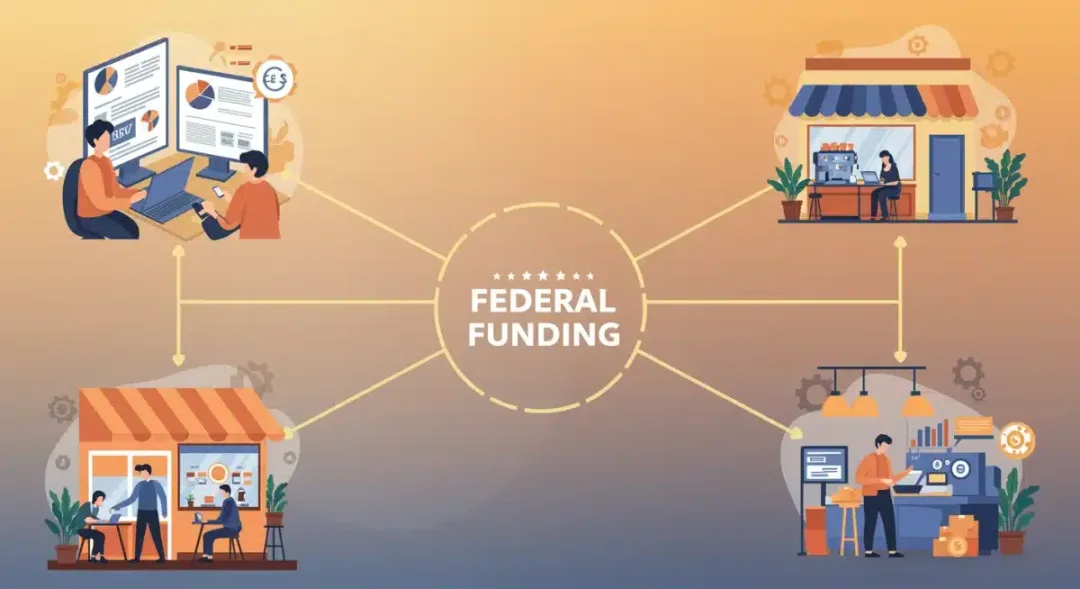
The long-term impact of federal grants on small businesses
Beyond the immediate financial injection, securing federal grants can have a profound and lasting impact on a small business. These grants serve as a powerful validation of your business’s potential and innovation, opening doors to further opportunities and enhancing your credibility within your industry. The benefits extend far beyond the monetary award itself, contributing to sustainable growth and development.
For many small businesses, federal funding can be the catalyst that transforms a promising idea into a viable product or service, allows for expansion into new markets, or significantly boosts research and development efforts. This strategic support helps businesses overcome critical financial hurdles that might otherwise hinder progress.
Beyond funding: advantages of federal grant awards
The ripple effects of receiving a federal grant can be extensive, providing advantages that contribute to long-term success and resilience. These non-financial benefits are often as valuable as the funding itself.
- Enhanced Credibility: Being awarded a federal grant signals to investors, partners, and customers that your business and its projects have undergone rigorous scrutiny and received endorsement from a reputable authority. This can attract additional private funding.
- Increased Visibility: Grant awards often come with public recognition, raising your business’s profile and potentially leading to new business opportunities and collaborations.
- Access to Networks: Many grant programs connect recipients with a network of experts, mentors, and other grantees, fostering collaboration and knowledge sharing.
- Capacity Building: The process of applying for and managing a federal grant can significantly improve your business’s internal processes, project management skills, and financial oversight capabilities.
- Innovation Acceleration: Grants often support cutting-edge research and development, enabling small businesses to innovate faster and bring new technologies or services to market more quickly than would be possible with self-funding.
Ultimately, federal grants are not just about money; they are about partnership with the government to achieve shared goals, whether that’s advancing scientific discovery, creating jobs, or fostering economic resilience in communities. Understanding and leveraging these opportunities can fundamentally reshape the trajectory of your small business.
| Key Point | Brief Description |
|---|---|
| Grant Sources | Federal agencies like SBA, NIH, DOE, and NSF are primary providers of small business grants. |
| Eligibility Check | Confirm small business definition, legal status, financial health, and project alignment with grant goals. |
| Deadlines & Platforms | Utilize Grants.gov and SAM.gov, and agency sites to track strict application deadlines. |
| Proposal Keys | Craft proposals with clear summaries, detailed projects, justified budgets, and strong evaluation plans. |
Frequently asked questions about federal small business grants
What is the primary difference between a federal grant and a loan for small businesses?▼The fundamental difference is repayment. Federal grants are funds awarded to small businesses that do not need to be repaid, provided the terms and conditions are met. Loans, on the other hand, must be repaid with interest over a specified period, making grants a non-dilutive funding source.
How can I find out if my business qualifies as a ‘small business’ for federal grants?▼The Small Business Administration (SBA) defines small businesses based on specific size standards, which vary by industry (NAICS code) and are measured by average annual receipts or number of employees. You can use the SBA’s Size Standards Tool on their website to check your eligibility.
What are the most common reasons a federal grant application might be rejected?▼Common rejection reasons include not meeting eligibility criteria, missing application deadlines, submitting an incomplete proposal, failing to articulate a clear project plan, or not aligning the project with the grant’s specific objectives. A lack of demonstrable impact is also a frequent cause.
Is it necessary to use Grants.gov for all federal grant applications?▼Grants.gov is the primary federal portal for finding and applying for most discretionary federal grants, and registration is often a prerequisite. While some agencies may have their own application systems, starting with Grants.gov is generally the most comprehensive approach to discover opportunities.
What should I do if my first federal grant application is unsuccessful?▼If your application is unsuccessful, request feedback from the granting agency if available. Use this feedback to understand weaknesses in your proposal or project idea. Refine your approach, seek further guidance from SBDCs or mentors, and apply for other suitable grants. Persistence is often rewarded.
Conclusion
The landscape of new federal grants for small businesses offers significant opportunities for growth, innovation, and stability. However, successfully navigating this environment demands a strategic approach centered on understanding application deadlines, meticulously meeting eligibility requirements, and crafting compelling proposals. By leveraging available resources and maintaining a proactive stance, small business owners can unlock crucial funding that not only supports their immediate needs but also fosters long-term success and contributes to broader economic development. The journey may be challenging, but the rewards of securing federal support are transformative, providing both financial backing and invaluable credibility for your venture.