

Ads
Upcoming Social Security changes in 2026 could significantly alter retirement benefits, necessitating proactive financial planning for current and future retirees.
Are you wondering how the New Social Security Changes in 2026: How Will They Affect Your Retirement Benefits? The landscape of retirement planning is constantly evolving, and understanding these shifts is crucial for securing your financial future. As we approach 2026, significant adjustments to Social Security are on the horizon, potentially reshaping how millions of Americans receive their hard-earned benefits. This article will delve into what these changes mean for you, offering insights and strategies to navigate the evolving system.
Understanding the Social Security System: A Brief Overview
Before we dive into the specifics of the 2026 changes, it’s essential to grasp the fundamentals of the Social Security system. Established in 1935, Social Security serves as a vital safety net, providing retirement, disability, and survivor benefits to millions of Americans. It operates as a pay-as-you-go system, where current workers’ contributions fund the benefits of today’s retirees and beneficiaries.
The system’s financial health is primarily dependent on the balance between incoming payroll tax contributions and outgoing benefit payments. Demographic shifts, such as increasing life expectancies and declining birth rates, have placed considerable strain on this delicate balance, prompting ongoing discussions and proposed adjustments.
How Social Security is Funded
Social Security relies on specific funding mechanisms to sustain its operations. Understanding these mechanisms is key to comprehending why changes become necessary over time.
- Payroll Taxes: The primary source of funding comes from the Federal Insurance Contributions Act (FICA) tax, which is levied on earnings up to a certain annual limit. Both employees and employers contribute a percentage of wages to Social Security and Medicare.
- Taxation of Benefits: A portion of Social Security benefits may be subject to federal income tax for some recipients, depending on their total income. These tax revenues are then redirected back into the Social Security trust funds.
- Interest on Trust Fund Investments: The Social Security trust funds hold reserves that are invested in special U.S. Treasury securities. The interest earned on these investments also contributes to the system’s financial stability.
In essence, the Social Security system is designed to be self-sustaining, but external factors continually challenge its long-term solvency. These pressures are precisely what lead to proposed changes, such as those anticipated for 2026, aiming to ensure the program’s viability for future generations.
The Impetus for Change: Why 2026 is a Crucial Year
The year 2026 is emerging as a critical juncture for Social Security, not due to a single, sudden event, but rather as a culmination of long-term demographic and economic trends. The Social Security Administration (SSA) regularly releases projections detailing the program’s financial outlook, and these reports have consistently highlighted the need for legislative action to address anticipated shortfalls.
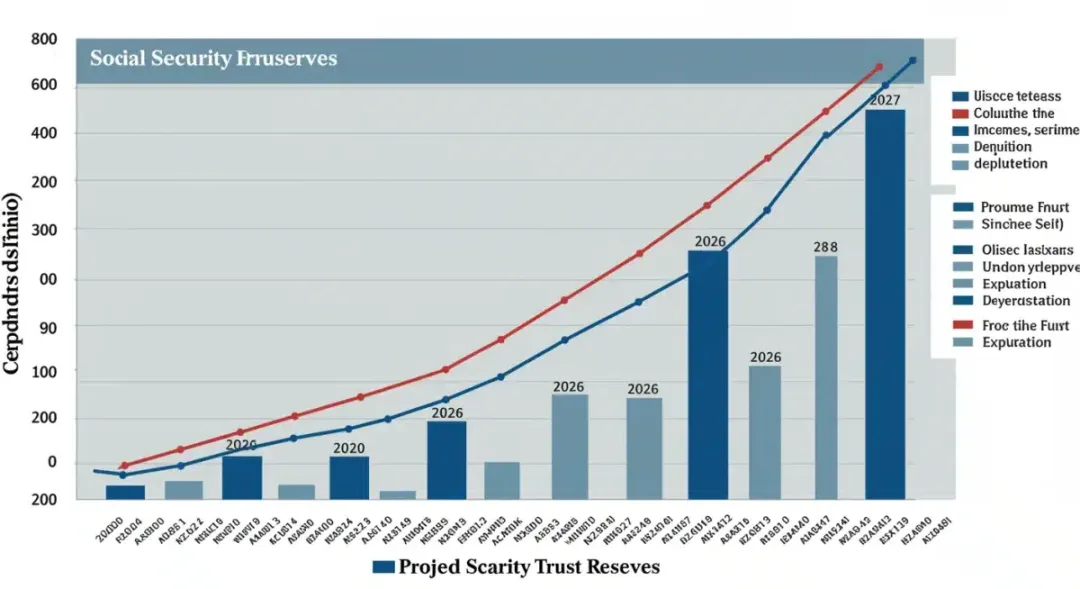
The primary concern revolves around the depletion of the Social Security trust funds. While the system currently has sufficient funds to pay full benefits, projections indicate that without intervention, the trust funds could be exhausted within the next decade. Should this occur, Social Security would only be able to pay out a portion of promised benefits, funded solely by ongoing payroll tax contributions.
Demographic Shifts and Economic Realities
Several interconnected factors contribute to the projected financial challenges facing Social Security:
- Aging Population: The large baby boomer generation is increasingly entering retirement, leading to a higher number of beneficiaries drawing benefits.
- Increased Life Expectancy: People are living longer than ever before, meaning they collect Social Security benefits for an extended period.
- Declining Birth Rates: Lower birth rates in recent decades mean fewer new workers are entering the workforce to contribute payroll taxes, thus reducing the ratio of workers to beneficiaries.
- Wage Stagnation: While wages have grown, they haven’t always kept pace with the increasing demands on the Social Security system, affecting the amount of tax revenue collected.
These fundamental shifts in the population and economy create an imbalance that the current Social Security structure struggles to accommodate. The proposed changes for 2026 are an attempt to rebalance this equation, ensuring the program’s longevity and continued ability to support retirees and other beneficiaries.
The significance of 2026 lies in its proximity to these projected trust fund depletion dates. Lawmakers and policymakers are under increasing pressure to find sustainable solutions, making it imperative for individuals to stay informed about potential adjustments to their future benefits.
Potential Changes to Retirement Age and Eligibility
One of the most frequently discussed and impactful proposals for addressing Social Security’s long-term solvency involves adjustments to the full retirement age (FRA). The FRA is the age at which individuals are entitled to receive 100% of their Social Security benefits. Currently, for those born in 1960 or later, the FRA is 67. However, with increasing life expectancies, there’s a strong argument for raising this age further.
Raising the FRA would mean individuals would have to work longer to receive their full benefits or accept a permanently reduced benefit if they claim earlier. This change aims to reduce the total amount of benefits paid out over a person’s lifetime, thereby easing the strain on the trust funds.

Impact on Early and Delayed Claiming
Changes to the full retirement age would naturally ripple through the dynamics of early and delayed claiming strategies. Currently:
- Early Claiming: You can start receiving benefits as early as age 62, but your monthly payment will be permanently reduced.
- Delayed Claiming: For each year you delay claiming benefits past your FRA, up to age 70, you receive a higher monthly payment (known as delayed retirement credits).
If the FRA increases, the reduction for early claiming would become more significant, and individuals would need to work longer to earn delayed retirement credits. For instance, if the FRA moved to 68, someone claiming at 62 would face a larger percentage reduction compared to the current system. Conversely, delaying until 70 would still yield maximum benefits, but it would mean working two years longer past the new FRA to achieve that maximum.
These potential adjustments to retirement age and eligibility are critical considerations for anyone planning their retirement. They underscore the importance of understanding the updated rules and how they might influence when you choose to begin receiving your Social Security benefits.
Adjustments to Benefit Calculation and COLA
Beyond changes to the retirement age, another area ripe for reform involves the methods used to calculate Social Security benefits and the annual cost-of-living adjustments (COLAs). The current benefit formula is progressive, meaning it replaces a higher percentage of pre-retirement earnings for lower-income workers. However, there are ongoing debates about whether this formula needs to be tweaked to ensure greater equity or financial sustainability.
COLAs are designed to help Social Security benefits keep pace with inflation, protecting retirees’ purchasing power. These adjustments are typically determined by the Consumer Price Index for Urban Wage Earners and Clerical Workers (CPI-W). However, some proposals suggest using an alternative measure, such as the Chained CPI, which generally grows at a slower rate than the CPI-W.
The Implication of a Chained CPI
Shifting to a Chained CPI for calculating COLAs would have a tangible impact on beneficiaries over time:
- Slower Benefit Growth: Annual COLAs would likely be smaller, leading to a gradual erosion of purchasing power compared to the current system.
- Cumulative Effect: While individual annual reductions might seem small, their cumulative effect over a decades-long retirement could be substantial.
- Disproportionate Impact: Older retirees, who have been receiving benefits for longer, would likely feel the greatest impact as the compounded effect of lower COLAs accumulates.
Any changes to benefit calculation formulas or COLA methodologies would directly affect the monthly payments retirees receive. These are complex calculations with far-reaching implications, and understanding their potential modifications is crucial for accurate retirement planning. The aim of such changes is often to reduce the total outlay from the trust funds, thereby extending their solvency, but at the cost of slower benefit growth for recipients.
Impact on High-Income Earners and Taxable Earnings
The Social Security system has a wage base limit, which is the maximum amount of earnings subject to Social Security taxes each year. For 2024, this limit is $168,600. Earnings above this threshold are not subject to Social Security taxes, nor are they used to calculate future benefits. This means that high-income earners contribute a smaller percentage of their total income to Social Security compared to those earning below the wage base limit.
One frequently discussed proposal for strengthening Social Security’s finances involves raising or even eliminating the wage base limit. If this limit were increased, more of high-income earners’ salaries would be subject to Social Security taxes, leading to a significant increase in revenue for the trust funds. Eliminating the limit entirely would mean all earned income, regardless of amount, would be subject to Social Security taxes.

Potential Ramifications for Affluent Individuals
Changes to the wage base limit would predominantly affect higher earners:
- Increased Tax Burden: Individuals earning above the current wage base limit would see a notable increase in their Social Security tax contributions.
- Benefit Calculation Adjustments: If more of their earnings are taxed, it could also lead to a slight increase in their future Social Security benefits, though the benefit formula is progressive and caps out.
- Political Debate: This change is often a point of contention, with arguments focusing on fairness, economic impact, and the principle of progressive taxation.
For high-income earners, monitoring discussions around the wage base limit is paramount. Any adjustments could directly impact their take-home pay and overall financial planning strategies. These proposals aim to shore up the system’s finances by requiring more contributions from those with the highest earning capacity, rather than reducing benefits for all.
Strategies for Adapting to Future Social Security Changes
Given the high probability of Social Security changes in 2026 and beyond, proactive planning is not just advisable; it’s essential. Relying solely on Social Security for retirement income is becoming increasingly risky, making diversification of retirement savings more critical than ever. The key to successfully navigating these shifts lies in understanding your personal financial situation and taking steps to build a robust retirement portfolio.
One of the most effective strategies is to maximize contributions to other retirement accounts. Vehicles like 401(k)s, IRAs (Traditional or Roth), and health savings accounts (HSAs) offer tax advantages and can provide a substantial supplement to your Social Security benefits. The earlier you start saving, the more time your investments have to grow through compounding.
Diversifying Your Retirement Income Streams
A multi-faceted approach to retirement income provides greater security and flexibility:
- Personal Savings and Investments: Beyond traditional retirement accounts, consider taxable investment accounts, real estate, or other income-generating assets.
- Part-Time Work in Retirement: Many retirees choose to work part-time, not only for extra income but also for social engagement and mental stimulation.
- Annuities: These financial products can provide a guaranteed income stream for life, offering a predictable supplement to Social Security.
- Employer Pensions: If you are fortunate enough to have a defined-benefit pension, factor it into your overall retirement strategy.
It’s also prudent to regularly review your financial plan with a qualified advisor. They can help you understand the potential impact of Social Security changes on your specific situation and adjust your strategies accordingly. Staying informed about legislative developments and being flexible with your retirement timeline are also crucial aspects of adapting to the evolving Social Security landscape. By taking these steps, you can help ensure a more secure and comfortable retirement, regardless of the changes that may come.
| Key Change Area | Brief Description of Impact |
|---|---|
| Full Retirement Age (FRA) | Potential increase, requiring later retirement for full benefits or accepting reduced amounts. |
| Benefit Calculation & COLA | Possible shift to Chained CPI, leading to slower annual benefit increases and reduced purchasing power over time. |
| Wage Base Limit | Consideration of raising or eliminating the limit, impacting high-income earners’ tax contributions. |
| Trust Fund Solvency | Changes aim to prevent depletion, ensuring the system can pay a higher percentage of promised benefits long-term. |
Frequently asked questions about Social Security Changes in 2026
What are the primary reasons for the anticipated Social Security changes in 2026?▼The main drivers are demographic shifts, including an aging population, increased life expectancy, and declining birth rates, which are straining the pay-as-you-go system. These factors contribute to projected trust fund shortfalls necessitating adjustments.
How might the full retirement age be affected by these changes?▼There’s a significant possibility that the full retirement age (FRA), currently 67 for those born in 1960 or later, could be incrementally raised. This would mean individuals need to work longer to receive 100% of their scheduled benefits.
Will my current Social Security benefits be reduced if I’m already retired?▼While direct cuts to current benefits are less common, changes could affect future cost-of-living adjustments (COLAs). A shift to a Chained CPI, for example, could lead to slower growth in benefits over time, indirectly reducing their purchasing power.
What is the potential impact of changes to the Social Security wage base limit?▼If the wage base limit is raised or eliminated, high-income earners would pay Social Security taxes on a larger portion of their earnings. This would increase revenue for the system, but also their tax burden.
What steps can I take now to prepare for these potential changes?▼Diversify your retirement savings beyond Social Security, maximize contributions to 401(k)s and IRAs, consider annuities, and consult a financial advisor. Staying informed and flexible with your retirement plans will be key.
Conclusion
The prospect of New Social Security Changes in 2026: How Will They Affect Your Retirement Benefits? underscores the need for vigilance and proactive financial planning. While the precise nature of these adjustments remains subject to legislative debate, the underlying demographic and economic pressures suggest that some form of reform is highly likely. Whether through modifications to the full retirement age, adjustments to benefit calculations, or changes in how high-income earners contribute, the goal will be to ensure the long-term solvency of this cornerstone program.
For individuals, this means taking ownership of their retirement future. It’s no longer enough to passively rely on Social Security; a diversified approach that includes personal savings, investments, and potentially other income streams is paramount. Consulting with financial professionals, staying informed about policy discussions, and adapting your retirement strategy will empower you to navigate these changes effectively and secure the comfortable retirement you envision.