

Ads
The arrival of revolutionary foldable tablets this year promises to redefine mobile computing by blending smartphone portability with enhanced productivity, offering users unprecedented versatility and innovative design.
The tech world is buzzing with anticipation as we stand on the cusp of a significant leap forward in personal computing. This year promises to introduce a device that could fundamentally alter how we interact with technology: the revolutionary foldable tablet. It’s more than just a gadget; it’s a paradigm shift, blending the portability of a smartphone with the expansive utility of a laptop, all within a single, elegant form factor.
The Dawn of a New Era in Mobile Computing
The concept of a foldable device has long been a staple of science fiction, but 2024 is set to make it a mainstream reality in the tablet market. This shift isn’t merely about aesthetics; it’s about unlocking new possibilities for productivity, entertainment, and creativity on the go. The engineering marvel behind these devices allows for screens that can literally bend and fold, transforming their utility in unprecedented ways.
Early iterations of foldable smartphones have paved the way, ironing out kinks and refining the technology. Now, with tablets, the stakes are higher, and the potential impact is even greater. Imagine a device that fits comfortably in a small bag, yet unfolds to offer a vast display perfect for detailed work, immersive media consumption, or collaborative projects. This versatility is what truly sets the new generation of foldable tablets apart.
Beyond the Hype: What to Expect
While the initial excitement around any new technology can be overwhelming, it’s crucial to look at the tangible benefits these devices promise. We’re talking about more than just a flexible screen; we’re talking about an entire ecosystem of software and hardware designed to leverage this unique form factor. Developers are already exploring innovative ways to optimize applications for the dynamic screen real estate, ensuring a seamless experience whether folded or unfolded.
- Enhanced Portability: A large screen that folds into a compact size.
- Versatile Use Cases: Seamless transition between tablet, laptop, and e-reader modes.
- Innovative Software: Apps designed to adapt fluidly to screen changes.
- Premium Materials: Durable, lightweight constructions for daily use.
The promise of these devices extends to professionals who require powerful tools in a mobile format, students needing adaptable learning aids, and casual users seeking an ultimate entertainment hub. The blend of form and function aims to cater to a broad spectrum of needs, pushing the boundaries of what a personal electronic device can be.
In essence, the arrival of these foldable tablets signifies a maturation of flexible display technology. It’s an invitation to reimagine our digital interactions, offering a glimpse into a future where our devices are as adaptable as our daily lives demand. The innovation isn’t just in the bendable screen, but in the intelligent design that maximizes its potential.
Design and Engineering Marvels: The Core of Foldable Tablets
At the heart of the revolutionary foldable tablet lies an extraordinary feat of design and engineering. Crafting a device that can withstand thousands of folds without compromising screen integrity or overall functionality is a monumental challenge. Manufacturers are investing heavily in advanced materials and intricate hinge mechanisms to ensure durability and a premium user experience.
The screens themselves are a testament to material science. Ultra-thin glass (UTG) and advanced polymer layers are being developed to offer both flexibility and resilience. These materials are designed to minimize creases and withstand the rigors of daily use, ensuring the display remains pristine and responsive over time. The tactile feel and visual clarity are paramount, even with the added complexity of a folding mechanism.
Hinge Technology: The Unsung Hero
The hinge is arguably the most critical component of any foldable device. It’s responsible for the smooth, precise folding action and for maintaining the screen’s flatness when unfolded. Early foldable devices faced challenges with hinge durability and visible creases, but significant advancements have been made. Modern hinges are more robust, compact, and designed to virtually eliminate the gap when folded, protecting the inner screen from dust and debris.
- Fluid Movement: Engineered for smooth, effortless folding and unfolding.
- Durability: Tested for tens of thousands of folds to ensure longevity.
- Minimal Crease: Advanced designs aim to reduce or eliminate visible screen creases.
- Gap Reduction: Tighter closing mechanisms protect the display.
Beyond the physical design, the internal components also require innovative engineering. Batteries, motherboards, and cooling systems must be designed to accommodate the unique form factor, often split across two halves of the device, connected by flexible circuits. This intricate arrangement ensures that performance is not sacrificed for flexibility, maintaining the power and efficiency expected from a modern tablet.
The overall aesthetic also plays a crucial role. These tablets are not just functional; they are designed to be objects of desire, blending cutting-edge technology with sophisticated style. Slim profiles, premium finishes, and thoughtful ergonomics contribute to an experience that feels both futuristic and intuitive, pushing the boundaries of device design.
Software Innovation and User Experience
A foldable tablet is only as good as the software that powers it. The unique hardware demands a rethinking of the user interface and application design to fully capitalize on the dynamic screen real estate. Operating systems are being optimized to seamlessly transition between folded and unfolded states, offering intuitive multitasking capabilities and adaptive layouts.
One of the most exciting aspects is the potential for new interaction modes. Imagine a tablet that can be propped up like a mini-laptop for typing, or folded into an L-shape for video calls, with the camera perfectly positioned. These devices will likely introduce ‘flex mode’ or ‘tent mode’ functionalities, offering novel ways to consume content, collaborate, and create without the need for external accessories.
Adaptive Interfaces and Multitasking
The software will intelligently recognize the device’s current state and adjust the interface accordingly. When unfolded, apps might expand to offer a desktop-like experience with multiple windows, while folded, they could present a streamlined, smartphone-esque layout. This adaptability is key to making the foldable tablet a truly versatile tool for various scenarios.
- Seamless Transitions: UI adapts instantly to folding and unfolding.
- Enhanced Multitasking: Run multiple apps side-by-side on the large canvas.
- Contextual Experiences: Software leverages the physical form for new interactions.
- Developer Support: Tools and guidelines for optimizing apps for foldable screens.

Multitasking will reach new heights on these devices. The expansive unfolded screen provides ample space for running several applications simultaneously, enabling users to drag and drop content between windows, reference documents while writing, or participate in video conferences while taking notes. This level of productivity, traditionally reserved for laptops, will now be available in a highly portable format.

Beyond productivity, entertainment experiences will also be elevated. The large, immersive displays will make watching movies, playing games, and browsing photos a more engaging experience. Content creators and artists will benefit from the larger canvas for digital drawing and editing, potentially replacing multiple devices with a single, highly capable foldable tablet.
Key Players and Anticipated Models
The race to dominate the foldable tablet market is heating up, with several major tech giants poised to release their interpretations of this revolutionary device. While specific details often remain under wraps until launch, industry whispers and patent filings provide tantalizing clues about what to expect from the leading contenders.
Companies with a strong track record in display technology and mobile innovation are naturally at the forefront. These manufacturers are leveraging years of research and development in flexible screens and advanced materials to bring compelling products to market. Competition is fierce, which ultimately benefits consumers by driving innovation and refining the technology at a rapid pace.
Who’s Leading the Charge?
While no names have been officially confirmed for release this year, we can anticipate strong entries from companies that have already ventured into the foldable smartphone space. These pioneers have gained invaluable experience in manufacturing flexible displays and designing robust hinge mechanisms, giving them a significant head start.
- Established Tech Giants: Brands with existing foldable phone lines are likely to expand into tablets.
- Display Innovators: Companies specializing in screen technology will be key suppliers and developers.
- Software Ecosystems: Manufacturers with robust app stores and operating systems will offer tailored experiences.
- Premium Segment Focus: Initial releases are expected to target the high-end market.
Each manufacturer will likely bring its unique strengths to the table, whether it’s a focus on ultra-thin designs, enhanced stylus integration, or bespoke software features. The diversity in approaches will offer consumers a range of choices, allowing them to select a device that best fits their specific needs and preferences. Pricing is expected to be in the premium segment initially, reflecting the advanced technology and R&D investment.
The introduction of these foldable tablets isn’t just about individual products; it’s about establishing a new category within the electronics market. The success of these early models will be crucial in shaping consumer perception and driving future adoption. Industry analysts are closely watching to see which brands will capture the imagination of the market and set the standard for foldable computing.
Challenges and Future Outlook
While the prospect of foldable tablets is incredibly exciting, the technology is not without its challenges. The journey from concept to mass-market adoption involves overcoming hurdles related to cost, durability, and consumer perception. Addressing these issues will be key to the long-term success and widespread integration of these innovative devices into our daily lives.
Manufacturing flexible displays and intricate hinge mechanisms is inherently expensive, which translates to a higher retail price for consumers. As production scales and technology matures, these costs are expected to decrease, making foldable tablets more accessible. However, initial models will likely remain premium products, targeting early adopters and tech enthusiasts.
Addressing Durability Concerns
Durability has been a significant concern for early foldable devices. The constant bending and unfolding put stress on the screen and hinge. Manufacturers are continually improving materials and designs to enhance resilience, but consumers will need assurance that these devices can withstand everyday wear and tear. Warranties and repair services will also play a crucial role in building trust.
- High Manufacturing Costs: Initial high prices are a barrier for many consumers.
- Long-term Durability: Ensuring screen and hinge integrity over extended use.
- Software Optimization: Fully leveraging the foldable form factor across all applications.
- Consumer Education: Communicating the benefits and unique usage scenarios effectively.
Another challenge lies in software optimization. While operating systems are being adapted, ensuring that the vast ecosystem of third-party applications works seamlessly and intuitively across folded and unfolded states requires significant developer effort. The full potential of foldable tablets will only be realized when apps are designed from the ground up to take advantage of their unique capabilities.
Looking ahead, the future of foldable tablets appears promising. As the technology evolves, we can expect even more innovative designs, thinner profiles, and enhanced functionalities. The integration of advanced AI, improved battery life, and even more versatile form factors will likely define the next generation of these devices, solidifying their place as a cornerstone of future mobile computing.
Impact on Productivity and Creativity
The introduction of the revolutionary foldable tablet is poised to have a profound impact on how we approach productivity and creativity. By offering an expansive digital canvas that can also fold into a highly portable form, these devices bridge the gap between traditional tablets, laptops, and even large-format displays, creating new opportunities for users across various fields.
For professionals, the ability to carry a large, multi-window workspace in a compact form factor is a game-changer. Imagine reviewing complex documents, managing spreadsheets, and participating in video calls simultaneously, all on a single device that easily fits into a small bag. This enhances mobility without compromising on the screen real estate often needed for serious work, allowing for greater flexibility in where and how work gets done.
Unleashing Creative Potential
Artists, designers, and content creators stand to benefit immensely from the larger, adaptable screens. The ability to sketch, paint, and edit on an expansive, high-resolution display that can then be folded for easy transport offers unparalleled freedom. Digital canvases will feel more natural, and the precision offered by advanced styluses will be further enhanced by the increased screen size.
- Enhanced Multitasking: Run multiple applications side-by-side with ease.
- Portable Workspace: Large screen productivity in a compact form.
- Immersive Creative Canvas: More space for digital art, design, and editing.
- Collaborative Tools: Share and interact with content more effectively.
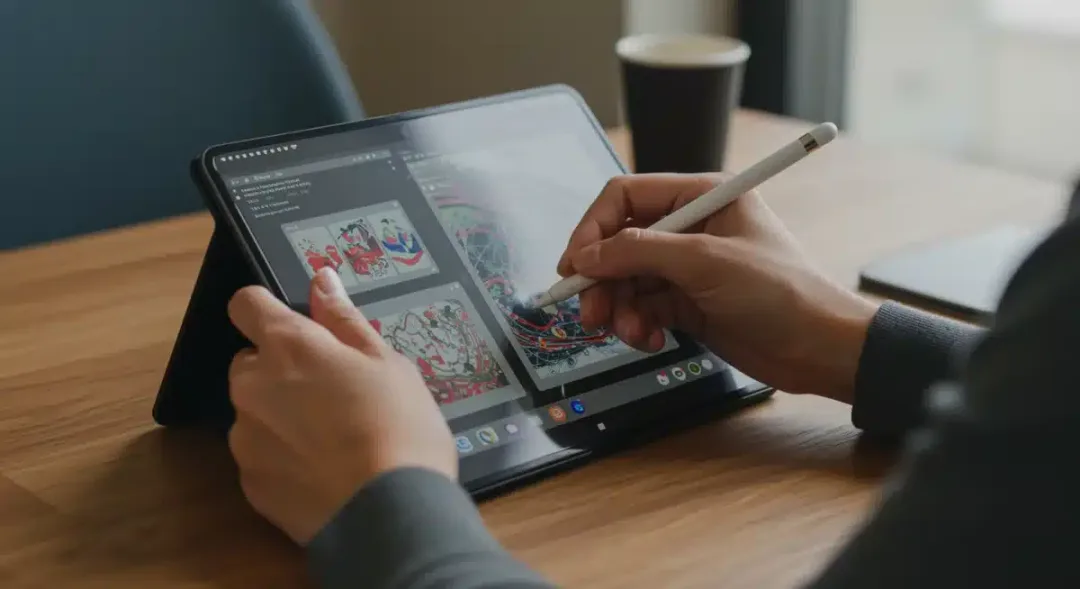
Furthermore, the foldable nature opens up new possibilities for collaborative work. A tablet can be unfolded and laid flat on a table, allowing multiple users to interact with content simultaneously, or folded into a stand mode to present information more effectively during meetings. This encourages more dynamic and interactive collaboration, moving beyond static presentations.
The convergence of powerful processing, adaptive software, and flexible displays means that tasks previously requiring a desktop or laptop can now be performed with remarkable efficiency on a portable tablet. This empowerment of users to be productive and creative anywhere, anytime, is perhaps the most significant promise of the foldable tablet revolution, truly unboxing the future of personal computing.
The Economic and Market Implications of Foldable Tablets
The emergence of the revolutionary foldable tablet is not just a technological marvel; it carries substantial economic and market implications. This new product category has the potential to shake up the existing tablet and laptop markets, create new revenue streams, and influence consumer spending habits in the broader tech industry. Understanding these dynamics is crucial for both manufacturers and consumers.
Initially, foldable tablets are expected to occupy a premium niche, much like early smartphones. Their high price points will reflect the advanced R&D, complex manufacturing processes, and cutting-edge components involved. This premium positioning will likely attract early adopters and tech enthusiasts, who are willing to pay for the latest innovations and unique user experiences.
Reshaping the Tablet and Laptop Landscape
The introduction of highly versatile foldable tablets could potentially blur the lines between traditional tablets and ultraportable laptops. Consumers might find themselves choosing a foldable tablet that offers both a large screen for productivity and a compact form factor for mobility, rather than needing separate devices. This could lead to a consolidation of devices for some users, impacting sales in both categories.
- New Market Segment: Creating a high-value category between tablets and laptops.
- Supply Chain Impact: Driving innovation and demand for flexible display components.
- Increased Competition: Intensifying the battle among tech giants for market share.
- Software Ecosystem Growth: Encouraging developers to create optimized applications.
Furthermore, the success of foldable tablets will have a ripple effect across the supply chain. Demand for flexible display panels, advanced hinge mechanisms, and specialized materials will surge, driving innovation and investment in these areas. Component manufacturers will play a vital role in enabling mass production and reducing costs over time, making the technology more scalable.
From a software perspective, the economic implications are also significant. Developers will be incentivized to create applications that leverage the unique capabilities of foldable screens, potentially leading to a new wave of innovative apps and services. This expansion of the software ecosystem will further enhance the value proposition of foldable tablets, driving their adoption and solidifying their place in the market. The economic footprint of these devices will extend far beyond their direct sales, influencing various sectors of the tech economy.
| Key Aspect | Brief Description |
|---|---|
| Innovative Design | Merges smartphone portability with large tablet functionality via flexible screens and advanced hinges. |
| Software Optimization | Operating systems and apps adapt seamlessly to folded/unfolded states, enhancing multitasking. |
| Productivity Boost | Offers desktop-like multitasking and creative canvas in a highly portable form factor. |
| Market Impact | Creates a new premium segment, influencing existing tablet/laptop markets and supply chains. |
Frequently Asked Questions About Foldable Tablets
What is a foldable tablet and how does it work?▼A foldable tablet is a device with a flexible display that can bend and fold, allowing it to transform between a compact form and a larger screen. This is achieved through advanced materials like ultra-thin glass and intricate hinge mechanisms that ensure durability and seamless transitions.
What are the main advantages of a foldable tablet over a traditional one?▼The primary advantages include enhanced portability, as a large screen folds into a smaller device, and increased versatility, offering multiple usage modes like laptop, tablet, and e-reader. It provides a larger canvas for productivity and entertainment without sacrificing mobility.
Will foldable tablets be durable enough for daily use?▼Manufacturers are employing robust materials and advanced hinge designs, testing devices for tens of thousands of folds to ensure longevity. While initial models faced durability concerns, significant improvements have been made to withstand the rigors of daily use, offering greater reliability.
How will software adapt to the foldable tablet form factor?▼Operating systems and applications are being optimized to intelligently adapt their interfaces when the tablet is folded or unfolded. This includes seamless transitions, enhanced multitasking capabilities with split-screen views, and contextual experiences that leverage the physical form for new interactions.
What is the expected price range for these new foldable tablets?▼Given the advanced technology and complex manufacturing involved, the first generation of revolutionary foldable tablets is expected to be priced in the premium segment. While prices may decrease over time with mass production, early adopters should anticipate a significant investment for these cutting-edge devices.
Conclusion: Embracing the Foldable Future
The impending arrival of the revolutionary foldable tablet this year marks a pivotal moment in the evolution of personal technology. It represents not just an incremental upgrade but a fundamental reimagining of what a mobile device can be. By seamlessly blending the expansive utility of a large display with the unparalleled convenience of a compact, portable form factor, these devices are set to redefine how we work, create, and consume content. While challenges regarding cost and durability persist, the relentless innovation in materials, engineering, and software promises a future where our digital tools are as adaptive and versatile as our lives demand. The foldable tablet is more than just a gadget; it’s a testament to human ingenuity, offering a tantalizing glimpse into a more flexible, productive, and exciting technological landscape.