
Ads
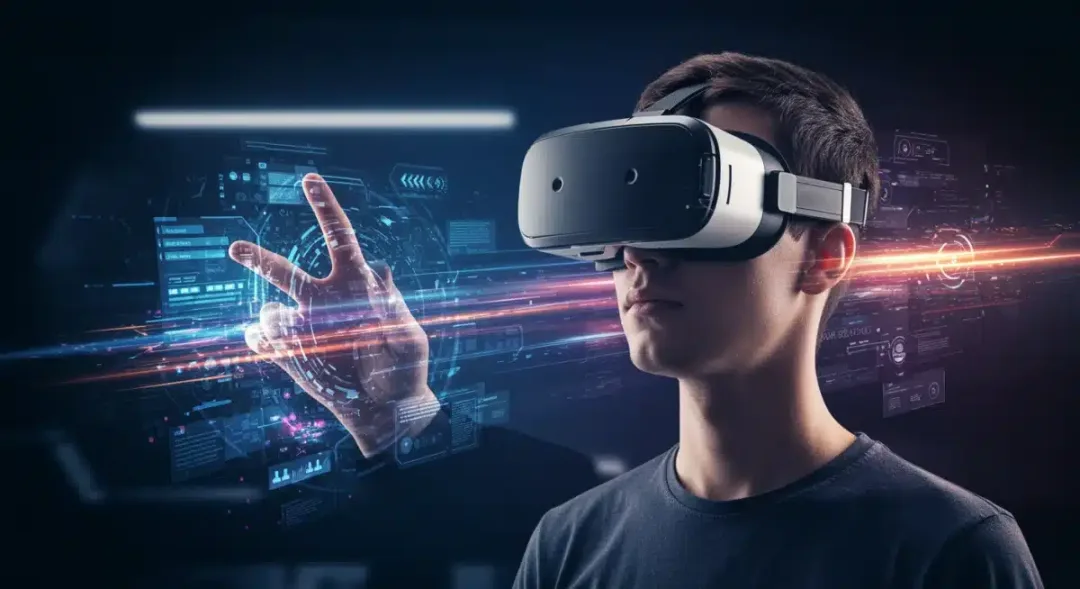
The future of gaming will be profoundly transformed by the innovative VR headsets 2026 gaming, introducing unprecedented levels of realism and interactive experiences that promise to redefine how we engage with virtual worlds.
The landscape of interactive entertainment is on the cusp of an extraordinary evolution, with The Future of Gaming: Exploring the Latest VR Headsets Arriving in 2026 promising to reshape our understanding of immersion. Imagine stepping into virtual worlds so real they defy distinction from reality, where every sight, sound, and even touch feels genuinely tangible. This isn’t a distant dream; it’s the imminent reality as groundbreaking virtual reality technology prepares to hit the market. We’re about to delve into the next generation of VR headsets, analyzing the innovations that will define gaming experiences in just a couple of years.
The Dawn of Unprecedented Visual Fidelity in VR
As we approach 2026, the visual capabilities of VR headsets are undergoing a monumental transformation, moving beyond mere resolution bumps to deliver truly photorealistic experiences. This leap is driven by a combination of advanced display technologies and sophisticated rendering techniques, promising to blur the lines between the virtual and the real.
Modern VR systems are integrating Micro-OLED and QLED panels, offering superior contrast ratios, deeper blacks, and incredibly vibrant colors that were previously unattainable. These display types are crucial for creating a sense of presence, as they eliminate the ‘screen door effect’ that plagued earlier generations of VR. Furthermore, advancements in pixel density mean that individual pixels become virtually indistinguishable to the human eye, resulting in a seamless and natural visual field.
Pushing the Boundaries of Resolution and Field of View
The race for higher resolution displays is relentless, with 2026 headsets projected to feature resolutions far exceeding current consumer models. This isn’t just about clearer images; it’s about enabling users to perceive fine details in virtual environments, from the texture of a distant mountain to the intricate patterns on a character’s armor. A wider field of view (FoV) is equally important, expanding the peripheral vision and making the virtual world feel more expansive and less like looking through binoculars.
- 8K+ Resolution per Eye: Expect resolutions that push beyond 4K per eye, delivering astonishing clarity.
- Expanded Field of View: Headsets will offer FoVs approaching 180 degrees, matching natural human vision.
- Dynamic Foveated Rendering: This technique renders only the area where the user is looking in high detail, saving computational power.
The combination of ultra-high resolution and an expansive field of view will dramatically enhance immersion, making virtual environments feel more tangible and believable. Developers will have more freedom to create intricate worlds without fear of visual compromises.
Beyond raw pixel counts, the refresh rates of these new displays are also seeing significant improvements. Higher refresh rates, typically 120Hz or even 144Hz, contribute to smoother motion and reduce motion sickness, a common issue in earlier VR iterations. This fluid visual experience is essential for fast-paced gaming and for maintaining a consistent sense of presence. The visual fidelity of VR headsets in 2026 will not just be about seeing more, but seeing it with unprecedented clarity and fluidity, fundamentally changing how we perceive virtual worlds.

Revolutionary Haptics and Immersive Feedback Systems
Visuals are only one piece of the immersion puzzle; true presence in virtual reality requires engaging more senses. The VR headsets arriving in 2026 are poised to revolutionize haptic feedback and other sensory technologies, moving beyond simple vibrations to deliver a nuanced and realistic sense of touch and physical interaction within virtual environments.
Next-generation haptic systems will integrate advanced actuators into controllers, gloves, and even full-body suits. These systems can simulate a wide range of sensations, from the subtle click of a virtual button to the impact of a projectile or the texture of a surface. Imagine feeling the resistance of a bowstring, the cold dampness of virtual rain, or the warmth of a digital campfire. This level of tactile feedback adds an entirely new dimension to gaming, making interactions more intuitive and believable.
Advanced Haptic Gloves and Suits
While basic haptic feedback has been present in controllers for years, 2026 will see the widespread adoption of more sophisticated devices. Haptic gloves, for instance, will allow users to ‘feel’ virtual objects, discerning their shape, size, and even texture. Full-body haptic suits, though still niche, are becoming more refined, offering sensations across the entire body, from environmental effects to combat impacts.
- Force Feedback Integration: Gloves and controllers will offer variable resistance, simulating weight and object interaction.
- Thermal Feedback: Early prototypes suggest the ability to simulate temperature changes, adding another layer of realism.
- Micro-Vibration Arrays: Fine-tuned vibrations can emulate specific textures, like rough stone or smooth metal.
These innovations will make interactions in VR games feel far more natural and engaging. Picking up a virtual sword will have a perceived weight, and dodging an attack will be accompanied by a subtle physical sensation, deepening the overall immersion.
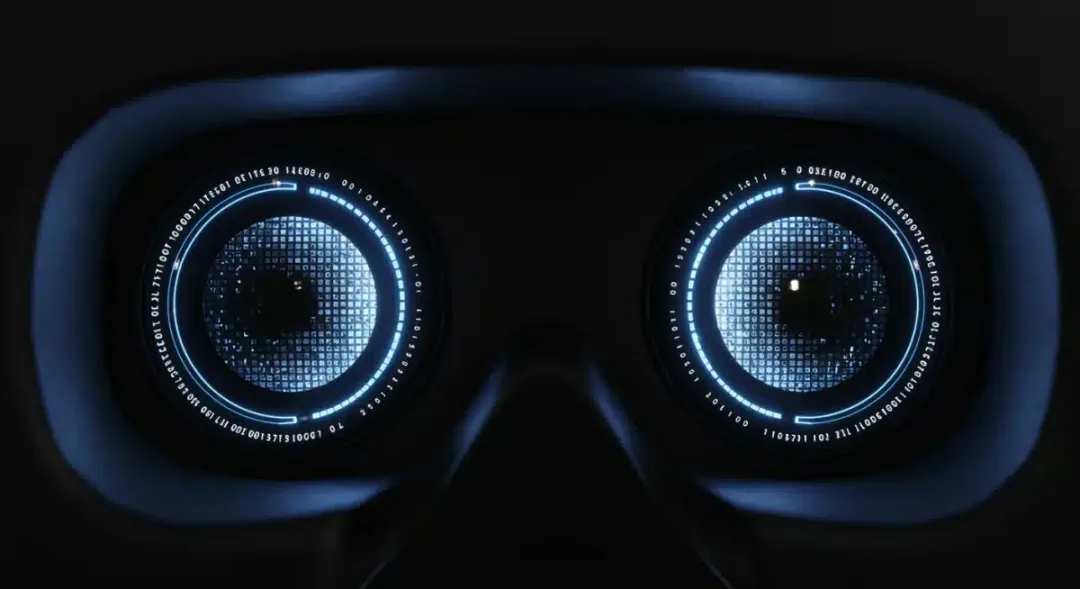
Beyond haptics, other feedback systems are also evolving. Auditory experiences are becoming more sophisticated with spatial audio technologies that accurately place sound sources in the virtual environment, enhancing directional awareness and realism. Some experimental systems are even exploring olfactory feedback, introducing scents to further trick the brain into believing the virtual world is real. The synergy of these advanced feedback mechanisms will create an unprecedented level of sensory immersion, making the virtual indistinguishable from reality for brief, exhilarating moments.
Untethered Freedom: The Rise of Wireless and Standalone VR
One of the most significant barriers to widespread VR adoption has been the cumbersome nature of tethered headsets. The need for powerful PCs and restrictive cables often detracted from the immersive experience. However, the VR headsets 2026 gaming landscape will be dominated by advanced wireless and standalone solutions, offering unparalleled freedom of movement and accessibility.
The push for untethered VR is driven by advancements in mobile processing power, efficient wireless communication protocols, and sophisticated spatial tracking algorithms. Standalone headsets are no longer just for casual experiences; they are rapidly closing the gap with PC VR in terms of graphical fidelity and computational horsepower. This means high-quality VR gaming will become accessible to a much broader audience, without the need for expensive gaming rigs.
Enhanced Connectivity and Processing Power
Next-gen wireless VR will leverage Wi-Fi 6E and future Wi-Fi 7 standards, offering ultra-low latency and high bandwidth to stream complex graphical data seamlessly. This eliminates the visual artifacts and delays that sometimes plague current wireless solutions, ensuring a smooth and responsive experience. Furthermore, the integrated System-on-a-Chip (SoC) solutions within standalone headsets are becoming incredibly powerful, capable of rendering complex scenes directly on the device.
- Wi-Fi 7 Integration: Ultra-low latency and massive bandwidth for crystal-clear wireless streaming.
- Dedicated VR Processors: Custom-designed SoCs optimized for VR rendering and spatial computing.
- Edge Computing Integration: Offloading some processing tasks to local servers or the cloud for enhanced performance.
The combination of robust wireless connectivity and powerful onboard processing will allow users to move freely within their play spaces, enhancing the sense of presence and reducing physical constraints. This freedom is crucial for active VR games and social experiences.
Beyond standalone capabilities, even PC-tethered headsets are adopting advanced wireless streaming solutions, providing the best of both worlds: PC-level graphics with wireless freedom. This trend towards untethered experiences signifies a pivotal moment for VR, making it more convenient, comfortable, and ultimately, more enjoyable for mainstream consumers. The removal of physical cables allows for more natural movement and interaction, fostering a deeper sense of immersion and making VR gaming a truly liberating experience.
The Evolution of Eye-Tracking and Foveated Rendering
Eye-tracking technology is not new to VR, but its integration and sophistication in the VR headsets 2026 gaming models will be revolutionary. This technology goes beyond simply knowing where a user is looking; it enables a host of performance optimizations and new interaction paradigms that were previously impossible.
At its core, eye-tracking allows the headset to precisely determine the user’s gaze direction. This information is then leveraged by foveated rendering, a technique that significantly reduces the computational load on the GPU. By rendering only the central foveal region (where the eye is focused) in maximum detail and progressively decreasing the resolution in the peripheral vision, systems can achieve higher frame rates and more complex graphics without demanding exponentially more processing power. This smart rendering approach is a game-changer for pushing visual fidelity in VR.
Dynamic Interactions and Enhanced Comfort
Beyond performance, eye-tracking opens doors for more intuitive user interfaces and interactions. Gaze-based selection, for example, allows users to navigate menus or select objects simply by looking at them, reducing reliance on traditional controllers. This can make VR experiences more accessible and natural.
- Gaze-Based UI Navigation: Interact with menus and objects using only your eyes.
- Automatic IPD Adjustment: Headsets can automatically calibrate interpupillary distance for optimal comfort and clarity.
- Realistic Avatar Expression: Eye movements can be mirrored on virtual avatars, enhancing social presence in multiplayer.
The ability to track eye movements also contributes to greater comfort. Automatic IPD (interpupillary distance) adjustment ensures that the lenses are perfectly aligned with the user’s eyes, reducing strain and improving visual clarity. This personalization is critical for long VR sessions.
Furthermore, eye-tracking can be used to gather valuable data on user attention and engagement, allowing developers to create more compelling and responsive environments. Imagine characters in a game reacting to your gaze, or environmental details subtly changing based on where you are focusing. The seamless integration of eye-tracking and foveated rendering will not only deliver a more visually stunning experience but also a more comfortable and intuitively interactive one, fundamentally enhancing the user’s connection to the virtual world.
Mixed Reality: Blending the Virtual with the Real
While pure virtual reality immerses users entirely in digital worlds, mixed reality (MR) offers a compelling alternative by seamlessly blending virtual elements with the real physical environment. The VR headsets 2026 gaming market will see a significant emphasis on MR capabilities, enabling innovative gameplay and practical applications that bridge the gap between realities.
Mixed reality headsets utilize advanced pass-through cameras to capture the real world and then overlay digital content onto it. This allows users to remain aware of their physical surroundings while simultaneously interacting with virtual objects and characters. This duality opens up new possibilities for gaming, where your living room can become a battleground, a puzzle room, or a portal to another dimension, all while maintaining a connection to your immediate environment.
Innovative Gameplay and Practical Applications
MR gaming takes advantage of the physical space around the player, allowing for experiences that integrate real-world objects into gameplay. Imagine a virtual character hiding behind your couch, or a digital board game played on your coffee table. This integration creates a unique sense of wonder and interaction.
- Spatial Anchoring: Virtual objects remain fixed in real-world locations, enhancing realism.
- Real-World Interaction: Use your hands to manipulate virtual objects overlaid on your environment.
- Co-Located Multiplayer: Multiple users can share the same mixed reality experience in the same physical space.
Beyond gaming, mixed reality has immense potential for productivity, education, and social interaction. Imagine collaborating on 3D models with colleagues who are physically distant, or learning complex subjects through interactive holographic tutorials in your own home. The ability to see and interact with both the real and virtual simultaneously offers a powerful new computing paradigm.
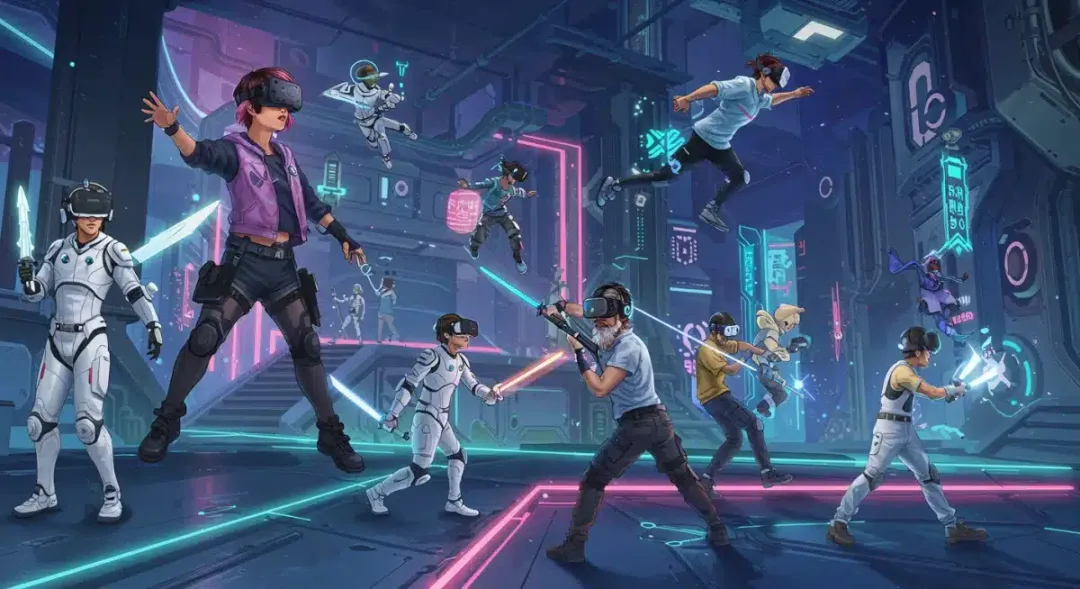
The advancements in camera technology, spatial mapping, and object recognition will make MR experiences incredibly robust and convincing. Headsets will be able to accurately understand the geometry of a room, identify real-world objects, and seamlessly integrate virtual content without visual glitches. This fusion of realities promises to unlock a new era of interactive experiences, fundamentally changing how we game, work, and connect. Mixed reality is not just about bringing virtual elements into the real world; it’s about creating a harmonious blend that enhances both.
The Future of VR Content and Ecosystems in 2026
The most advanced hardware is only as good as the content it supports. As the VR headsets 2026 gaming market matures, we can expect a corresponding explosion in the quality, diversity, and accessibility of virtual reality content. This includes not just games, but also social platforms, educational experiences, and productivity tools, all designed to leverage the unique capabilities of next-gen VR.
Developers are gaining more experience and sophistication in crafting compelling VR experiences, moving beyond tech demos to create full-fledged, narrative-driven games and applications. The increased processing power of new headsets will allow for more complex worlds, more detailed characters, and richer interactive elements. Furthermore, the growing user base will incentivize major studios to invest heavily in VR content creation, leading to a wider array of high-quality titles.
Expanding Content Libraries and Social VR
The coming years will see a significant expansion of VR gaming libraries, with a focus on immersive storytelling, multiplayer experiences, and innovative genres unique to the VR medium. Social VR platforms will also evolve, offering more realistic avatars, richer interaction tools, and seamless integration with real-world social networks.
- AAA VR Titles: Expect more big-budget games from established publishers.
- Cross-Platform Compatibility: Greater interoperability between different VR ecosystems.
- Persistent Virtual Worlds: Development of expansive, always-on virtual spaces for social interaction and gaming.
The evolution of social VR is particularly exciting. Imagine attending virtual concerts with friends from across the globe, collaborating in shared creative spaces, or simply hanging out in a virtual cafe. These experiences will become more realistic and accessible, fostering a true sense of community within the metaverse.
Beyond entertainment, VR is finding its footing in professional fields. Architects can walk through virtual buildings, surgeons can practice complex procedures, and educators can create immersive learning environments. The ecosystem surrounding VR headsets in 2026 will be robust, offering a diverse array of content that caters to every interest and need. This includes not just premium experiences but also a thriving independent developer scene, constantly pushing the boundaries of what’s possible. The convergence of advanced hardware and compelling content will solidify VR’s position as a mainstream computing platform.
| Key Feature | Brief Description |
|---|---|
| Visual Fidelity | Ultra-high resolution (8K+ per eye), wide FoV, and foveated rendering for photorealistic graphics. |
| Haptic Feedback | Advanced gloves and suits deliver nuanced touch, force, and even thermal sensations. |
| Wireless Freedom | Standalone headsets with powerful SoCs and Wi-Fi 7 for untethered, high-fidelity experiences. |
| Mixed Reality | Seamless blending of virtual objects with the real world via advanced pass-through cameras. |
Frequently Asked Questions About 2026 VR Gaming
What major advancements are expected in VR headsets by 2026 for gaming?▼By 2026, VR headsets will feature ultra-high resolution displays (8K+ per eye), wider fields of view, and advanced foveated rendering. Expect revolutionary haptic feedback, truly untethered wireless experiences, and sophisticated mixed reality capabilities that blend virtual and real worlds seamlessly, enhancing immersion significantly.
How will haptic feedback evolve in 2026 VR gaming?▼Haptic feedback will move beyond simple vibrations to nuanced sensations, integrating into gloves and full-body suits. These systems will simulate textures, force feedback (like pulling a bowstring), and even temperature changes, providing a more realistic and tactile interaction with virtual environments and objects in games.
Will VR gaming still require a powerful PC in 2026?▼While PC VR will continue to offer top-tier graphics, standalone VR headsets in 2026 will feature significantly more powerful integrated processors. They will support high-fidelity gaming without a PC, leveraging advanced wireless streaming (Wi-Fi 7) for untethered freedom and accessibility to a broader audience.
What role will eye-tracking play in future VR gaming?▼Eye-tracking will be crucial for performance optimization through foveated rendering, where only the gaze-focused area is rendered in high detail. It will also enable intuitive gaze-based interactions, automatic IPD adjustment for comfort, and more expressive avatars, making VR experiences more natural and efficient.
How will mixed reality impact VR gaming by 2026?▼Mixed reality will allow virtual elements to seamlessly blend with the real world, turning physical spaces into game environments. This enables innovative gameplay where virtual objects interact with real ones, and co-located multiplayer experiences, bridging the gap between digital and physical realities for unique gaming scenarios.
Conclusion
The journey towards 2026 promises a truly transformative era for virtual reality in gaming. The advancements in visual fidelity, haptic feedback, untethered freedom, and mixed reality capabilities are converging to create experiences that transcend previous limitations. As these cutting-edge VR headsets 2026 gaming devices become available, they will not only enhance immersion but also democratize access to high-quality VR, fostering a vibrant ecosystem of content and redefining what it means to ‘play.’ The future of gaming is not just about better graphics; it’s about a complete sensory and interactive revolution that will captivate and connect players in unprecedented ways.