

Ads
The evolving legal framework for gig workers in the United States is introducing significant changes, aiming to provide enhanced protections and benefits that redefine the traditional independent contractor model.
The gig economy has fundamentally reshaped how millions earn a living, offering flexibility but often lacking the traditional safety nets of employment. As this workforce expands, a critical question emerges: what are the new laws protecting gig workers: what rights and benefits are you entitled to? Recent legislative efforts across the United States are working to answer this, aiming to strike a balance between innovation and worker security.
Understanding the Gig Economy Landscape and Its Evolution
The gig economy, characterized by short-term contracts or freelance work as opposed to permanent jobs, has grown exponentially over the past decade. It encompasses a vast array of services, from ridesharing and food delivery to freelance writing and tech support. This model has offered unprecedented flexibility for workers and convenient services for consumers, but it has also brought to light significant challenges regarding worker classification and the absence of traditional employment benefits.
Historically, gig workers have largely been classified as independent contractors, a designation that exempts companies from providing benefits like minimum wage, overtime pay, unemployment insurance, and workers’ compensation. This classification has been a cornerstone of the gig economy’s business model, allowing for lower operational costs and greater agility. However, as the gig workforce swelled, so did the debate over whether this classification adequately protects those who rely on gig work for their primary income.
The push for reclassification
Many advocates argue that the independent contractor model, as applied to many gig workers, misrepresents the true nature of their employment. They contend that companies often exert significant control over how, when, and where gig workers perform their tasks, blurring the lines between contractor and employee. This push for reclassification has been a primary driver behind new legislative actions, seeking to extend employee-like protections without entirely dismantling the flexibility that defines gig work.
- Worker well-being: Ensuring basic protections for health and safety.
- Economic security: Providing a stable income floor and social safety nets.
- Fair competition: Leveling the playing field between traditional employers and gig companies.
The evolution of the gig economy landscape is not just a legal battle; it’s a societal discussion about the future of work. As more individuals turn to gig platforms, the demand for clearer regulations and stronger worker protections intensified, setting the stage for the legislative changes we are now seeing. This foundational shift aims to reconcile the innovative aspects of the gig economy with the fundamental rights that all workers deserve, fostering a more equitable and sustainable labor market for everyone involved.
Key Legislative Changes Impacting Gig Workers
In response to growing calls for better worker protections, several states and municipalities across the U.S. have enacted or proposed significant legislation aimed at redefining the rights and benefits of gig workers. These laws vary in their approach but generally seek to provide a middle ground between full employment status and traditional independent contractor classification, or to push for full reclassification.
One of the most notable legislative efforts has been California’s Assembly Bill 5 (AB5), which codified the “ABC test” for determining worker classification. Under this test, a worker is considered an employee unless the hiring entity can prove all three conditions: (A) the worker is free from the control and direction of the hiring entity in connection with the performance of the work, both under the contract for the performance of the work and in fact; (B) the worker performs work that is outside the usual course of the hiring entity’s business; and (C) the worker is customarily engaged in an independently established trade, occupation, or business of the same nature as the work performed for the hiring entity. This law sent shockwaves through the gig economy, leading to both legal challenges and significant adaptations by companies.
State-specific approaches and their implications
Beyond California, other states are exploring different models. Some have introduced laws that grant specific benefits to gig workers without fully reclassifying them as employees, often referred to as a “third way” or “worker plus” model. These models typically focus on providing benefits such as minimum earnings, health stipends, and paid sick leave, while maintaining the flexibility of independent contractor status. This approach attempts to balance business needs with worker welfare.
- New York: Discussions around minimum pay standards and benefits.
- Washington state: Enacted laws providing paid sick leave for gig workers.
- Massachusetts: Ongoing debates and legal challenges regarding worker classification.
These legislative changes are not without controversy. Gig economy companies often argue that reclassification or mandated benefits would severely impact their business model, leading to higher costs, reduced flexibility, and potentially fewer job opportunities for gig workers. Conversely, labor advocates argue that these protections are essential to prevent exploitation and ensure a dignified living for millions of workers. The ongoing legislative evolution reflects a complex interplay of economic interests, social justice concerns, and the fundamental question of what constitutes fair work in the 21st century.
Minimum Wage and Earning Protections for Gig Workers
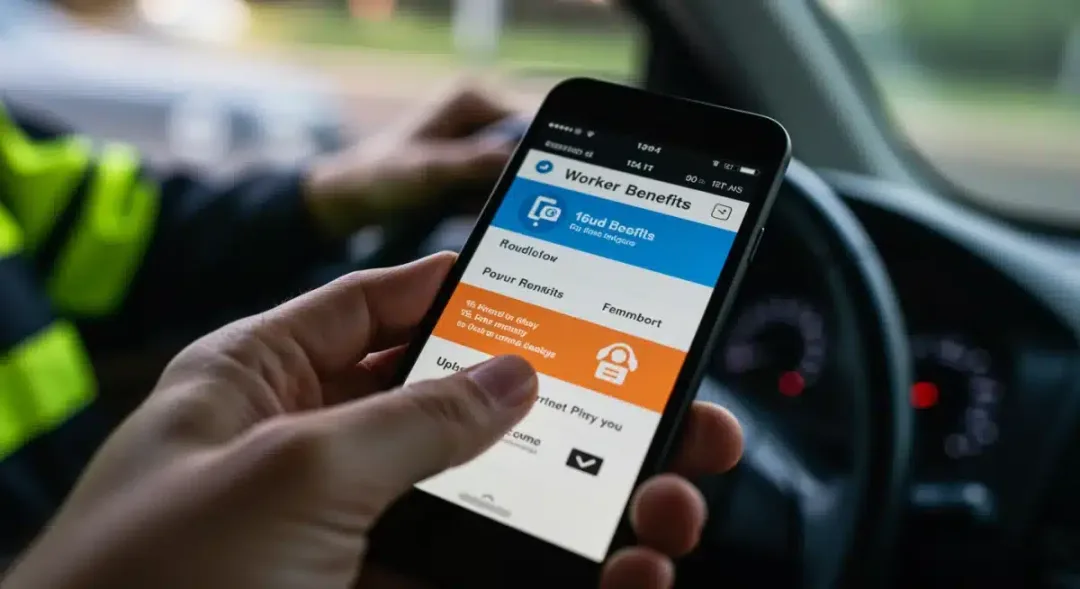
One of the most critical aspects of new legislation concerns minimum wage and earning protections for gig workers. Historically, independent contractors were not guaranteed a minimum wage, meaning their earnings could fluctuate significantly below what traditional employees might expect for similar work hours. New laws are beginning to address this disparity, aiming to establish a more stable and predictable income floor for those in the gig economy.
Several jurisdictions have introduced measures that mandate a minimum hourly earning for gig workers, often calculated after expenses. For example, some city ordinances and state laws now require platforms to ensure that, after factoring in time spent and costs incurred (like gas and vehicle maintenance), a gig worker’s net earnings meet or exceed the local minimum wage. This is a significant departure from the traditional model, where compensation was solely based on per-task rates, which could sometimes translate to very low hourly pay.

Calculating fair compensation
The implementation of minimum earning protections often involves complex calculations. Platforms are tasked with tracking active work time, which can include time spent waiting for assignments, traveling to pick up orders, and completing deliveries or services. Deductions for legitimate business expenses are also considered to arrive at a net hourly rate. This ensures that the minimum wage applies to the actual effort and resources gig workers invest, rather than just the payment received per completed task.
- Active time tracking: Platforms must accurately record work duration.
- Expense consideration: Costs like fuel and vehicle wear are factored into earnings.
- Guaranteed minimum: Ensuring earnings do not fall below a set hourly rate.
These protections are designed to provide a crucial safety net, particularly for those who rely heavily on gig work. By guaranteeing a minimum level of earnings, these laws aim to reduce financial precarity and offer greater economic stability. While challenges remain in enforcement and adaptation by platforms, the trend towards ensuring fair compensation is a clear indication of a shifting legal and ethical landscape for gig work. It signifies a move towards valuing the labor of gig workers more equitably, ensuring they are not left vulnerable to unpredictable market fluctuations or exploitative pay structures.
Access to Benefits: Health, Paid Leave, and Unemployment
Beyond minimum wage, one of the most significant changes for gig workers under new laws is enhanced access to benefits traditionally reserved for employees. These benefits, including health insurance, paid leave, and unemployment insurance, provide crucial financial security and support that gig workers previously lacked. The absence of such benefits has long been a major point of contention, leaving gig workers vulnerable in times of illness, injury, or economic downturns.
Some states and cities are now requiring gig companies to contribute to or directly provide health stipends, which can help offset the cost of health insurance for eligible workers. These stipends are often calculated based on the number of hours worked or earnings thresholds, providing a tangible benefit to those who dedicate significant time to gig platforms. This move acknowledges that reliable access to healthcare is a fundamental need, regardless of employment classification.

Paid sick leave and family leave
Paid sick leave is another vital protection gaining traction. New legislation in various jurisdictions is mandating that gig workers accrue paid sick time, allowing them to take time off when ill without losing essential income. This not only protects the individual worker but also promotes public health by discouraging sick individuals from working. Similarly, discussions are ongoing, and some nascent policies are emerging regarding paid family leave, offering support for workers needing to care for family members or welcome a new child.
- Health stipends: Financial assistance for healthcare costs.
- Paid sick leave: Earning time off for illness without pay loss.
- Unemployment insurance access: Eligibility for benefits during job loss.
Access to unemployment insurance (UI) has also been a critical area of focus, particularly highlighted during economic crises. Traditionally, independent contractors were ineligible for UI, leaving them without a safety net when work dried up. While federal programs temporarily extended UI to gig workers during the pandemic, many states are now exploring permanent solutions to include gig workers in their UI systems, recognizing the cyclical nature of some gig work and the need for broader economic stability. These expanded benefits represent a monumental shift, providing a more robust social safety net for a growing segment of the American workforce and signaling a broader reevaluation of worker rights in the digital age.
Understanding Worker Classification: Employee vs. Independent Contractor
The distinction between an employee and an independent contractor is central to understanding the rights and benefits available to gig workers. This classification determines whether a worker is entitled to protections like minimum wage, overtime, unemployment benefits, and workers’ compensation. For decades, the legal tests for this distinction have been complex and often subject to interpretation, but recent legislative trends aim to provide more clarity, particularly within the gig economy.
The core of the debate often revolves around the level of control a company exerts over a worker. Traditional tests, such as the IRS’s common-law test, look at behavioral control (whether the company directs how work is done), financial control (whether the company controls business aspects of the worker’s job), and the type of relationship (written contracts, benefits, permanency). However, the unique structure of gig platforms has often allowed companies to argue that their workers retain significant independence, thus qualifying as contractors.
The “ABC test” and its impact
The “ABC test,” as adopted by states like California, represents a more stringent standard for classification. As mentioned, for a worker to be classified as an independent contractor, the hiring entity must prove all three conditions: (A) the worker is free from the control and direction of the hiring entity; (B) the worker performs work outside the usual course of the hiring entity’s business; and (C) the worker is customarily engaged in an independently established trade or business. Meeting all three criteria, especially condition B, has proven challenging for many gig companies whose core business relies on the services provided by their workers.
- Behavioral control: How much the company dictates work methods.
- Financial control: Who controls payment, expenses, and investment.
- Relationship type: Written contracts, benefits, and job permanency.
The implications of worker classification are profound. If a gig worker is reclassified as an employee, the company becomes responsible for payroll taxes, unemployment insurance contributions, workers’ compensation, and providing benefits like health insurance and paid leave. This significantly increases labor costs for companies but provides a comprehensive safety net for workers. Conversely, maintaining independent contractor status allows companies to avoid these costs but leaves workers with fewer protections. The ongoing legal and legislative battles surrounding the ABC test and similar frameworks underscore the fundamental tension between business models and worker rights in the rapidly evolving gig economy.
Enforcement and Reporting Mechanisms for Gig Worker Rights
Even with new laws in place, the effectiveness of protecting gig worker rights hinges significantly on robust enforcement and clear reporting mechanisms. Without proper avenues for workers to report violations and for regulatory bodies to act, legislative changes can fall short of their intended impact. Consequently, many new legal frameworks are accompanied by provisions designed to empower workers and facilitate oversight.
State labor departments and federal agencies are increasingly focused on educating gig workers about their newly acquired rights and providing accessible channels for filing complaints. This includes creating dedicated online portals, hotlines, and informational campaigns. The goal is to demystify complex legal language and ensure that workers, who may operate outside traditional workplace structures, know where to turn if they believe their rights are being violated, whether it pertains to minimum earnings, paid leave accrual, or improper classification.
The role of transparency and data
Transparency from gig platforms is also becoming a key component of enforcement. Some laws require companies to provide clear and detailed breakdowns of earnings, expenses, and hours worked to their gig workers. This data allows workers to verify that they are receiving fair compensation and that minimum wage requirements are being met. Furthermore, aggregated, anonymized data from platforms can help regulatory bodies identify systemic issues and patterns of non-compliance, enabling more targeted enforcement actions.
- Accessible complaint channels: Easy ways for workers to report issues.
- Worker education initiatives: Informing gig workers about their rights.
- Platform data sharing: Companies providing transparent earning and work data.
Beyond government oversight, worker advocacy groups and legal aid organizations play a crucial role in supporting gig workers. They often provide free legal advice, help workers navigate the complaint process, and sometimes initiate class-action lawsuits to address widespread violations. The combination of empowered workers, proactive regulatory bodies, transparent platform operations, and supportive advocacy networks is essential for ensuring that new laws genuinely translate into improved working conditions and protections for gig workers. This multi-faceted approach aims to create a more accountable and equitable gig economy where rights are not just legislated but actively upheld.
The Future of Gig Work: What to Expect Next
The landscape of gig work is in a constant state of flux, and while significant legislative changes have already occurred, the evolution is far from over. Looking ahead, several trends and potential developments could further shape the rights and benefits of gig workers, influencing both the operational models of platforms and the daily lives of those who depend on them.
One notable trend is the continued push for a federal standard for gig worker classification. While states have taken varied approaches, a unified national framework could provide much-needed consistency and clarity, reducing the patchwork of regulations that currently exists. Such a federal law would likely aim to balance worker protections with the flexibility inherent in the gig model, potentially introducing a new category of worker that sits between traditional employee and independent contractor.
Technological innovations and their impact
Technological advancements will also play a crucial role. As AI and automation become more sophisticated, gig platforms may find new ways to manage their workforce, potentially impacting the degree of control they exert over workers and, consequently, their classification. Innovations in tracking and payment systems could also simplify the implementation of minimum wage laws and benefit accrual, making compliance easier for platforms and verification more straightforward for workers.
- Federal uniformity: Potential for national gig worker classification standards.
- AI integration: Impact on worker management and classification.
- Benefit portability: Exploring benefits that follow workers across platforms.
Furthermore, the concept of “portable benefits” is gaining traction. This model proposes that benefits like health insurance, paid time off, and retirement savings could be tied to the worker, not a specific platform, allowing them to accrue and carry benefits regardless of which gig company they work for. This approach could offer the best of both worlds: maintaining worker flexibility while providing essential security. The ongoing dialogue between policymakers, gig companies, labor unions, and workers themselves will be critical in navigating these complex issues, ultimately shaping a gig economy that is more equitable, sustainable, and adaptive to the changing nature of work.
| Key Protection Area | Brief Description of Changes |
|---|---|
| Worker Classification | Stricter tests (like ABC test) redefine who is an employee vs. independent contractor, impacting benefits. |
| Minimum Earnings | New laws mandate minimum hourly earnings for gig workers, often after expenses. |
| Health & Paid Leave | Increased access to health stipends, paid sick leave, and potential for family leave. |
| Unemployment Benefits | Efforts to include gig workers in state unemployment insurance systems for a stronger safety net. |
Frequently Asked Questions About Gig Worker Rights
What is the primary difference between an employee and an independent contractor?▼
The key distinction lies in the level of control a company has over the worker. Employees are typically subject to company direction regarding how, when, and where they work, and receive benefits. Independent contractors have more autonomy and are generally not entitled to employee benefits.
Do new laws guarantee minimum wage for all gig workers?▼
Not all, but a growing number of state and local laws are mandating minimum earnings for gig workers. These often ensure that, after expenses, a worker’s net pay meets or exceeds the local minimum wage for active work time, providing a crucial financial floor.