

Ads
The future of remote work tax benefits in 2026 and beyond will be shaped by evolving state and federal regulations, requiring individuals and businesses to adapt strategies for compliance and optimization amidst a dynamic employment landscape.
As the professional world continues its profound transformation, understanding the future of remote work tax benefits: what to expect in 2026 and beyond is becoming increasingly critical for both employees and employers across the United States. The shift to remote and hybrid models has rewritten the rulebook for how we work, live, and, crucially, how our income is taxed. This evolving landscape presents both opportunities and significant challenges, demanding careful navigation to ensure compliance and maximize financial advantages.
The Shifting Sands of Remote Work Taxation in the US
The acceleration of remote work post-2020 exposed significant gaps and ambiguities in existing tax codes. Laws designed for a predominantly office-based workforce often struggled to account for employees working across state lines, or even from different countries. This section delves into the foundational changes and the ongoing efforts to create a more coherent tax framework for the remote era.
Initially, many states responded with temporary relief or guidance, but as remote work solidified, the need for permanent solutions became apparent. The primary challenge lies in determining tax nexus – where income is earned and where an employer has a taxable presence. This can lead to complex situations where an employee living in one state works for a company headquartered in another, potentially incurring tax obligations in both.
Federal and State-Level Responses to Remote Work
Both federal and state governments are grappling with how to adapt tax policies to this new reality. While a comprehensive federal framework for remote work taxation has yet to materialize, various states have begun implementing or proposing their own solutions. These range from specific thresholds for establishing nexus to reciprocal agreements aimed at simplifying multi-state taxation.

- Federal Discussions: While no major federal remote work tax legislation has passed, discussions continue regarding potential guidelines for interstate taxation and the deductibility of home office expenses.
- State-Specific Rules: States like New York, Pennsylvania, and Delaware have long-standing “convenience of the employer” rules that tax remote workers based on their employer’s location, regardless of where the work is performed.
- Emerging Legislation: Other states are exploring new legislation to clarify tax obligations for remote workers and the companies employing them, often seeking to balance revenue needs with attracting remote talent.
The complexity is further compounded by local taxes, which can vary significantly even within the same state. Cities and counties may have their own income taxes, property taxes, and business taxes that need to be considered when employees work remotely from different jurisdictions. This patchwork of regulations creates a compliance headache for businesses and a potential financial burden for individuals if not properly managed. Understanding these nuances is paramount for anyone involved in remote employment.
Multi-State Tax Challenges for Employees and Employers
One of the most immediate and impactful consequences of widespread remote work is the proliferation of multi-state tax challenges. For employees, this often means navigating tax returns in multiple states, while for employers, it involves understanding payroll withholding requirements and establishing tax nexus in new jurisdictions. This section explores the intricacies of these challenges and their implications.
Employees who reside in one state but work for an employer in another may find themselves subject to income taxes in both states. This dual taxation scenario can lead to significant administrative burdens and, if not managed correctly, unexpected tax liabilities. Understanding residency rules and the specific tax laws of each state involved is crucial.
Understanding Residency and Nexus Rules
Residency for tax purposes is not always straightforward. A person might be considered a resident of a state if they spend a certain number of days there or maintain a permanent home. However, some states also have “domicile” rules, which consider where a person intends to make their permanent home. For employers, establishing a “nexus” in a state means having a sufficient physical or economic presence to trigger tax obligations.
- Employee Residency: Determining tax residency involves factors like where you live, where your family resides, where your driver’s license is issued, and where your primary banking relationships are.
- Employer Nexus: An employer can establish nexus through an employee working remotely from a state, even if the company has no other physical presence there. This can trigger corporate income tax, sales tax, and payroll tax obligations.
- Reciprocal Agreements: Some states have reciprocal agreements that allow residents of one state to work in a neighboring state without having income tax withheld by the employer’s state. However, these are not universal.
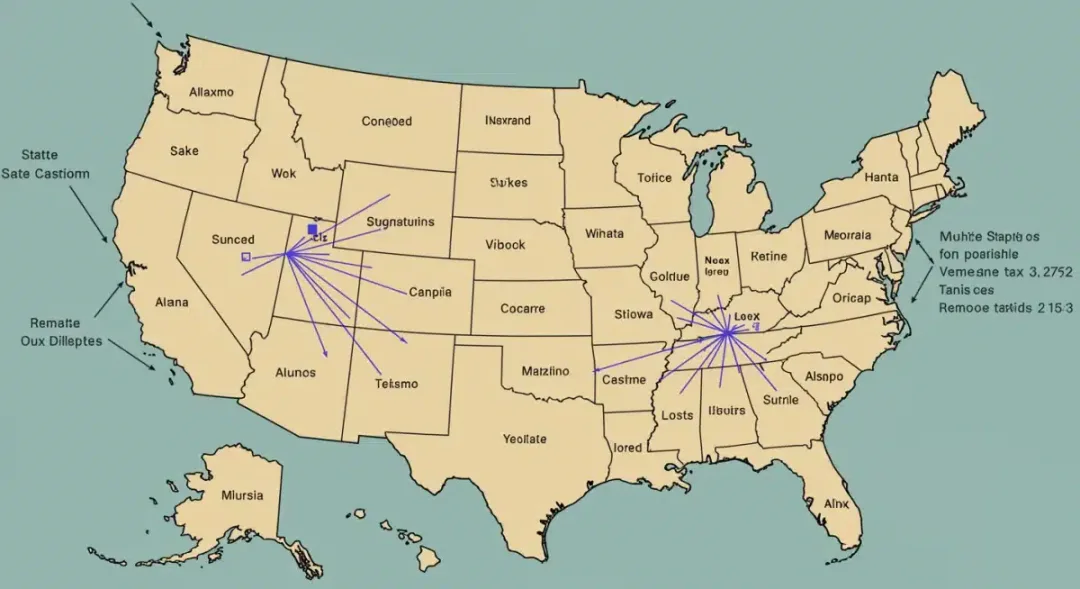
The absence of uniform federal guidance means that companies must meticulously track where their employees are working and for how long. This data is essential for determining which state’s withholding rules apply and where the company might owe corporate taxes. Failure to comply can result in significant penalties, back taxes, and interest, making proactive management of these issues a top priority for businesses.
Home Office Deductions and Their Evolution
For many remote workers, the home office became the new norm, leading to questions about the deductibility of associated expenses. The rules around home office deductions have a complex history, and their application to the modern remote workforce is continually evolving. This section examines the current state and anticipated changes to these important tax benefits.
Historically, home office deductions were primarily available to self-employed individuals. For W-2 employees, the Tax Cuts and Jobs Act of 2017 eliminated the miscellaneous itemized deduction for unreimbursed employee business expenses, effectively removing the home office deduction for most employed remote workers at the federal level until 2025.
What to Expect Post-2025 for Employees
With the expiration of certain provisions of the Tax Cuts and Jobs Act (TCJA) in 2025, there’s a possibility that the unreimbursed employee business expense deduction could return. If it does, W-2 remote employees might once again be able to deduct qualified home office expenses, subject to certain limitations and the 2% adjusted gross income (AGI) floor.
- Potential Return: The home office deduction for W-2 employees could be reinstated, allowing deductions for a portion of rent, utilities, internet, and office supplies.
- Strict Criteria: Even if reinstated, the deduction typically requires the home office to be used regularly and exclusively for business, and as the principal place of business.
- State-Level Deductions: Some states, however, still allow for home office deductions for employees, regardless of federal rules, offering a potential avenue for savings depending on your location.
For self-employed individuals and independent contractors, the home office deduction remains a viable option, provided they meet the IRS’s stringent requirements. This includes using a specific area of the home exclusively and regularly for business, or using it as a principal place of business. The simplified option, which allows a standard deduction per square foot, has made claiming this benefit easier for many. As 2026 approaches, employers might also consider providing stipends for remote work expenses, which can be tax-free to the employee if structured correctly as an accountable plan.
Employer Considerations: Payroll, Withholding, and Compliance
The shift to remote work has placed significant new burdens on employers, particularly concerning payroll, state tax withholding, and overall tax compliance. Managing a distributed workforce across multiple jurisdictions requires a sophisticated understanding of various state and local tax laws. This section explores the critical considerations for businesses in the remote work era.
Employers must meticulously track where their employees are physically performing work, as this dictates which state’s withholding rules apply. A single employee moving between states, even temporarily, can trigger new withholding obligations and potentially establish a tax nexus for the company in that state. This complexity necessitates robust internal systems and processes.
Navigating State Tax Registrations and Payroll Withholding
Registering in new states for payroll tax purposes can be a daunting administrative task. Each state has its own requirements, forms, and timelines. Furthermore, understanding the nuances of income tax withholding, unemployment insurance, and workers’ compensation in each jurisdiction is essential to avoid penalties.
- State Registrations: Employers may need to register for state income tax withholding, unemployment insurance, and other payroll taxes in every state where they have remote employees.
- Withholding Rules: Each state has unique rules for calculating and remitting income tax withholding. Employers must ensure their payroll systems are configured to handle these variations accurately.
- Nexus Implications: Having employees in a state can create a corporate income tax nexus, even if the employer has no other physical presence. This means the company could owe corporate income taxes in that state.
Beyond payroll, employers must also consider the potential impact on sales tax nexus. If an employee’s activities in a state are deemed to be soliciting sales or providing customer support, it could create a sales tax obligation for the company. This highlights the need for comprehensive tax planning and legal advice when expanding a remote workforce across state lines. The administrative overhead of managing multi-state tax compliance can be substantial, requiring significant investment in technology and expertise.
The Role of Technology in Remote Tax Compliance
In an increasingly complex remote work tax environment, technology is no longer just a convenience; it’s a necessity for ensuring compliance and efficiency. From tracking employee locations to automating payroll and tax filings, technological solutions are becoming indispensable for both individuals and businesses navigating the evolving tax landscape. This section highlights the key technological advancements and their impact.
Manual tracking of employee work locations for tax purposes is prone to errors and incredibly time-consuming. Modern solutions leverage GPS, IP address tracking, and self-reporting tools to provide accurate data on where employees are performing their duties, which is critical for determining correct tax jurisdictions.
Leveraging Software for Multi-State Tax Management
Specialized tax software and human resources information systems (HRIS) are evolving rapidly to meet the demands of remote work. These platforms can automate many of the complex processes involved in multi-state taxation, from calculating appropriate withholdings to generating necessary tax forms for various jurisdictions.
- Location Tracking Software: Tools that monitor employee location can help determine tax residency and nexus for both employees and employers, ensuring compliance with state-specific rules.
- Automated Payroll Systems: Advanced payroll systems can manage multi-state withholding calculations, ensuring accurate tax deductions based on employee location and state tax laws.
- Tax Compliance Platforms: Integrated platforms offer comprehensive solutions for managing corporate tax nexus, sales tax obligations, and other state-specific tax requirements for businesses with distributed teams.

For individuals, personal finance software and tax preparation services are also adapting to handle multi-state tax filings with greater ease. These tools can guide users through the complexities of filing in multiple states, helping them claim appropriate credits and deductions to avoid double taxation. The continuous development of these technologies will be crucial in simplifying the administrative burden associated with the future of remote work tax benefits.
Strategic Planning for 2026 and Beyond
As we look towards 2026 and the years that follow, proactive strategic planning will be essential for both remote workers and their employers to navigate the evolving tax landscape successfully. Anticipating changes, understanding potential risks, and implementing appropriate strategies can lead to significant financial benefits and ensure compliance. This section outlines key strategies for forward-thinking individuals and organizations.
For businesses, this means regularly reviewing their remote work policies, assessing their current tax footprint, and forecasting potential changes based on legislative trends. It also involves educating employees about their tax obligations and providing resources to help them comply.
Key Strategies for Individuals and Businesses
Individuals should focus on understanding their personal tax residency, tracking work locations, and seeking professional tax advice when working across state lines. Employers need to develop robust tax compliance programs, invest in appropriate technology, and consider flexible compensation structures.
- Regular Policy Review: Businesses should periodically review and update their remote work policies to reflect the latest tax laws and regulations in all relevant jurisdictions.
- Employee Education: Educating remote employees on their multi-state tax obligations and providing access to resources or tax professionals can mitigate risks for both parties.
- Professional Tax Advice: Both individuals and businesses should seek advice from tax professionals specializing in multi-state taxation to ensure compliance and optimize tax strategies.
- Technology Adoption: Investing in and fully utilizing advanced payroll, HRIS, and tax compliance software will be critical for managing the complexities of a distributed workforce.
Furthermore, employers might consider offering remote work stipends or allowances as part of their compensation packages. If structured as an accountable plan, these can be tax-free to the employee and provide a clear benefit. For individuals, maintaining meticulous records of work-from-home expenses, even if not currently deductible at the federal level, will be vital should deductions return or for state-level claims. The landscape of remote work tax benefits will undoubtedly continue to evolve, making continuous vigilance and adaptability paramount for financial success.
| Key Aspect | Impact on Remote Work Tax Benefits |
|---|---|
| Multi-State Taxation | Requires employees to file in multiple states and employers to manage complex withholding and nexus rules. |
| Home Office Deductions | Federal rules for W-2 employees may return post-2025; self-employed individuals continue to qualify under strict criteria. |
| Employer Compliance | Businesses face increased administrative burden for state registrations, payroll withholding, and establishing corporate tax nexus. |
| Tech Solutions | Essential for accurate location tracking, automated payroll, and comprehensive tax compliance in a distributed workforce environment. |
Frequently Asked Questions About Remote Work Tax Benefits
Will federal home office deductions return for W-2 employees in 2026?▼While not guaranteed, it’s possible. Provisions of the Tax Cuts and Jobs Act of 2017 that eliminated these deductions are set to expire in 2025. If Congress does not extend them, the ability for W-2 employees to deduct unreimbursed home office expenses may return, subject to prior limitations and the 2% AGI floor.
How does multi-state taxation affect remote workers?▼Remote workers may owe income taxes in both their state of residence and the state where their employer is located, depending on state laws and reciprocal agreements. This can create complex filing requirements and potential double taxation if not managed with proper credits.
What is “nexus” for employers with remote teams?▼Nexus refers to a sufficient connection between a business and a state that triggers tax obligations. For remote employers, having an employee working from a state can establish nexus, requiring the company to register for and collect various state taxes, including corporate income, sales, and payroll taxes.
Are remote work stipends tax-free for employees?▼Remote work stipends can be tax-free for employees if they are part of an “accountable plan.” This means the expenses must have a business connection, employees must substantiate their expenses, and any excess reimbursement must be returned to the employer. Otherwise, they are typically taxable income.
What role will technology play in future remote tax compliance?▼Technology will be crucial. Advanced software for location tracking, automated payroll, and integrated tax compliance platforms will help both individuals and businesses manage multi-state tax obligations, ensure accurate withholdings, and streamline the complex process of filing in multiple jurisdictions, reducing errors and administrative burdens significantly.
Conclusion
The landscape of remote work tax benefits is undergoing a profound and continuous evolution, driven by the enduring shift towards distributed workforces. As we approach 2026 and look further into the future, both individuals and organizations must remain highly adaptable and informed. The complexities of multi-state taxation, the potential return of certain federal deductions, and the increasing reliance on technological solutions underscore the need for strategic planning and ongoing vigilance. Proactive engagement with these changes, coupled with expert tax advice, will be paramount for navigating the intricate web of regulations, ensuring compliance, and optimizing financial outcomes in the dynamic era of remote work.