
Ads
AR glasses in 2026 represent a pivotal moment in wearable technology, with major tech companies launching sleeker, more affordable devices that finally offer genuine utility beyond novelty, though challenges in battery life, app ecosystems, and social acceptance remain significant barriers to true mainstream adoption.
For nearly a decade, augmented reality glasses have been the technology that always seemed “coming soon.” Early versions were bulky, expensive, and offered little beyond novelty. But as we move through 2026, something has shifted. Companies that once treated AR as a side project are now investing billions. The devices look more like regular eyeglasses, prices have dropped into accessible territory, and perhaps most importantly, people are actually finding reasons to wear them beyond the initial novelty. The question is no longer whether AR glasses will exist, but whether 2026 marks the year they become something you might actually want to buy.
The Evolution of AR Glasses: From Novelty to Necessity
The journey of AR glasses from science fiction concept to consumer product has been longer and more turbulent than most predicted. Remember when Google Glass first appeared and sparked both excitement and immediate privacy concerns? That was nearly a decade ago, and the technology has undergone a complete transformation since then.
What makes 2026 different from previous years is not just incremental improvement in display quality or battery life. Instead, we are witnessing a fundamental shift in how these devices integrate into daily life. The glasses are no longer trying to replace your smartphone; they are positioning themselves as a complementary tool that handles specific tasks more efficiently than a screen ever could.
From Enterprise to Consumer
- Early AR devices were primarily designed for industrial and medical applications
- Enterprise versions dominated sales from 2020-2024, proving the technology’s practical value
- Consumer versions now inherit lessons learned from enterprise deployments
- Manufacturing costs have decreased by approximately 60% since 2022
This progression from specialized tools to consumer devices follows a pattern we have seen with many technologies, from computers to smartphones. The enterprise phase served as both a testing ground and a proof of concept. Now, with that foundation established, the consumer market is finally ready for primetime.

Key Players Shaping the 2026 AR Landscape
The AR glasses market in 2026 is no longer a two-company race. While Apple and Meta continue to dominate headlines with their Vision and Ray-Ban partnerships respectively, a surprising number of players have entered the space with compelling offerings.
Samsung has partnered with several eyewear companies to release a line of AR glasses that integrate seamlessly with their smartphone ecosystem. Google, after years of false starts with Glass, has returned with a more refined approach focused on productivity. Meanwhile, smaller companies like Xreal and Rokid have carved out significant market share by focusing on specific use cases like gaming and movie watching.
Major Players and Their 2026 Offerings
- Apple continues to refine its Vision line, focusing on premium experiences and ecosystem integration
- Meta’s partnership with EssilorLuxottica has produced increasingly stylish and capable devices
- Samsung’s AR glasses offer strong compatibility with Android devices at competitive prices
- Chinese manufacturers like Xreal and Rokid provide affordable options with solid performance
The diversity of players has actually benefited consumers. Competition has driven innovation across all price points, and compatibility between different brands and ecosystems has improved dramatically. Where once you needed to commit entirely to one company’s ecosystem, 2026 glasses increasingly work across platforms.
Technical Breakthroughs Driving Mainstream Adoption
If there is one reason why AR glasses feel different in 2026, it is the cumulative effect of multiple small technical improvements that together create a substantially better experience. No single breakthrough has revolutionized the category, but the combination of advances in several areas has created a tipping point.
Display technology has improved significantly. MicroLED and advanced OLED panels now offer brighter images with better color accuracy, making text readable even in direct sunlight. The field of view has expanded from the narrow windows of earlier devices to something that feels more natural and immersive.
Key Technical Improvements
- Battery life now typically exceeds 8 hours of active use, up from 2-3 hours in 2022
- Weight has decreased to under 70 grams for premium models, comparable to heavy regular glasses
- Processing power allows for real-time translation and object recognition without cloud dependency
- Heat management improvements mean devices no longer become uncomfortable during extended use
Perhaps equally important are the improvements in comfort and aesthetics. The glasses look increasingly like normal eyewear, addressing one of the biggest barriers to adoption. Prescription lens integration has also become standard, meaning people who need glasses for vision correction no longer have to choose between their prescription and AR functionality.
Consumer Use Cases That Actually Make Sense
Early AR glasses struggled because they tried to do too much or too little. The devices launching in 2026 have found a middle ground by focusing on specific, valuable use cases rather than attempting to replace all screen-based computing.
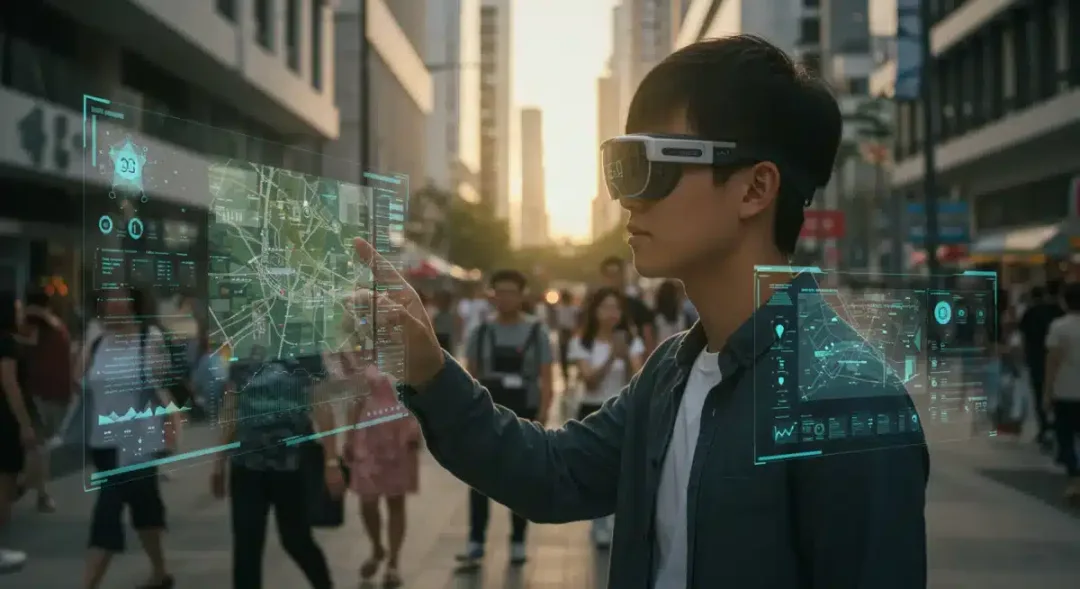
Navigation has become one of the most popular use cases. Rather than looking down at your phone while walking or driving, directions appear in your field of view. This seems like a small change, but users report that it makes a significant difference in convenience and safety.
Language translation has also found a strong market. Real-time translation of signs, menus, and even spoken conversations removes a major barrier to international travel and communication. The technology is not perfect, but it has reached the point where it genuinely helps rather than frustrates.
Most Popular 2026 AR Glass Applications
- Hands-free navigation while walking, cycling, or driving
- Real-time language translation for travel and business
- Workout metrics display during exercise without phone dependency
- Cooking assistance with step-by-step recipes visible while your hands are busy
- Productivity overlays for email, calendar, and quick notes during meetings
The key insight driving these use cases is that AR glasses excel at situations where looking at a screen is inconvenient or impossible. They are not competing with phones for general computing tasks; they are solving problems that phones cannot address effectively.
Barriers Still Holding Back Mass Adoption
Despite significant progress, AR glasses still face meaningful obstacles that prevent them from becoming truly mainstream in 2026. Acknowledging these challenges is important for understanding why adoption has been slower than some predicted, and what needs to happen next.
Price remains a significant barrier for many consumers. While costs have decreased substantially, premium AR glasses still cost several hundred dollars. For a device that complements rather than replaces a smartphone, this represents a tough sell for budget-conscious consumers.
Social acceptance continues to evolve. Many people still feel self-conscious wearing AR glasses in public, associating them with tech enthusiasts or science fiction. The fashion industry has helped by producing more stylish frames, but changing perceptions takes time.
Remaining Challenges
- Price-to-value ratio remains unclear for average consumers
- Battery life, while improved, still limits all-day use for power users
- App ecosystems remain fragmented compared to smartphone platforms
- Privacy concerns persist, particularly regarding recording capabilities
- Eye strain and comfort issues affect some users during extended wear
Perhaps the most significant barrier is simply that many people do not yet have a compelling reason to buy AR glasses. The use cases are real and valuable, but they are not essential. For many, the convenience they offer does not justify the expense and the need to charge another device.
What to Expect in the Coming Months
The trajectory of AR glasses suggests continued improvement, but the pace of change is worth examining. Industry analysts predict that 2026 will see approximately 15 million AR glasses shipped worldwide, representing significant growth but still a small fraction of the smartphone market.
Software development continues to accelerate. More apps are being designed with AR glasses in mind, and major application developers are adding AR-specific features. This software expansion may prove more important than hardware improvements in driving adoption.
Integration with artificial intelligence has become a major differentiator. AR glasses equipped with AI assistants can provide contextual information, answer questions, and help with tasks in ways that feel genuinely useful. This combination of AR and AI may be what finally pushes the technology into mainstream consideration.
Near-Term Predictions
- Prices will continue to decrease, with budget options dropping below $200
- AI integration will become a standard feature across all price tiers
- Enterprise adoption will accelerate as companies see productivity benefits
- More fashion brands will partner with tech companies for stylish options
- Regulatory frameworks will begin to address privacy concerns more comprehensively
The question is not whether AR glasses will become mainstream, but rather when. The technology has reached a point of sufficient maturity that early adopters and tech enthusiasts should find genuine value. Mass market success likely requires one more generation of improvement and perhaps a killer application that demonstrates clear superiority over existing solutions.
Making the Decision: Is 2026 Your Year for AR Glasses?
Whether AR glasses make sense for you in 2026 depends largely on your specific needs and circumstances. The technology has progressed enough that it is no longer just for early adopters, but it has not yet reached the point where everyone should run out and buy a pair.
If you frequently find yourself needing hands-free information access, whether for work, travel, or fitness, AR glasses offer genuine value. The same applies if you have tried other wearable technology and found it useful. For these users, 2026 represents a good time to buy.
However, if you are satisfied with your smartphone for most tasks and do not have specific situations where AR would help, waiting may make sense. The technology will continue improving, and prices will likely decrease further. There is no urgent reason to jump in immediately unless you have a clear use case.
Should You Buy AR Glasses in 2026?
- Consider buying if you frequently need hands-free access to information
- Consider buying if you travel often and would benefit from translation features
- Consider buying if you want to enhance workouts with real-time metrics
- Consider waiting if you are satisfied with smartphone-only solutions
- Consider waiting if budget is a significant concern
The decision ultimately comes down to how much value you place on the specific advantages AR glasses provide. For the right person, they represent a genuinely useful tool that enhances daily life. For others, they remain an interesting but unnecessary addition to their tech collection.
| Key Point | Brief Description |
|---|---|
| Technical Maturity | Displays, battery life, and comfort have reached levels suitable for daily use |
| Practical Use Cases | Navigation, translation, and fitness tracking offer genuine utility beyond novelty |
| Market Competition | Multiple players across price tiers provide choices for different needs |
| Remaining Barriers | Price, social acceptance, and app ecosystem still limit mass adoption |
Frequently Asked Questions
How much do AR glasses cost in 2026?▼AR glasses in 2026 range from approximately $200 for basic models to over $1,000 for premium devices with advanced features. Most consumer-focused options fall in the $300-$500 range, making them more accessible than previous years but still a significant investment compared to smartphones.
Can I use AR glasses with prescription lenses?▼Yes, most 2026 AR glasses support prescription lens inserts or come with prescription-compatible frames. Many manufacturers offer direct integration with optical providers, allowing you to get customized lenses fitted to your AR glasses. This addresses a major barrier that prevented many vision-corrected users from adopting earlier models.
How long does the battery last on AR glasses?▼Battery life varies by model and usage, but most 2026 AR glasses provide 6-10 hours of active use on a single charge. Lighter usage focused on specific features like navigation can extend this further. This represents a significant improvement from earlier generations, though heavy users may still need to recharge during the day for intensive applications.
What can AR glasses actually do that my phone cannot?▼AR glasses excel at hands-free scenarios where looking at a phone is impractical: navigation while walking or cycling, recipe guidance while cooking, workout metrics during exercise, and real-time translation of physical signs and menus. They are not trying to replace your phone but rather handle specific situations where a phone is inconvenient to use.
Are AR glasses socially acceptable for everyday wear?▼Social acceptance has improved significantly as glasses have become more stylish and mainstream. Many people now wear AR glasses in professional and social settings without issue. However, some situations still generate attention, and comfort levels vary by region and social context. The fashion industry partnerships have helped normalize wearing technology on your face.
Conclusion
AR glasses in 2026 have reached a genuine inflection point. The technology works, the devices look reasonable, and there are real use cases that provide value beyond what smartphones offer. However, they have not yet crossed the threshold into essential technology for most people. If you have specific needs that AR glasses address, this is a good year to buy. If you are waiting for the technology to become a must-have, another year or two of development may be worth the wait. The future of AR glasses is bright; the question is simply whether that future starts in 2026 or unfolds over the next few years.