
Ads
Choosing between 5G and Wi-Fi 6E in 2026 depends on your specific needs, balancing mobility, speed, latency, and cost for optimal device connectivity.
In the rapidly evolving landscape of wireless technology, understanding the nuances between 5G vs. Wi-Fi 6E: Which Connection is Right for Your Devices in 2026? is crucial for making informed decisions. As our digital lives become increasingly dependent on seamless, high-speed connectivity, the choice between these two powerful standards can significantly impact everything from streaming and gaming to smart home integration and professional productivity.
understanding 5G: the mobile revolution
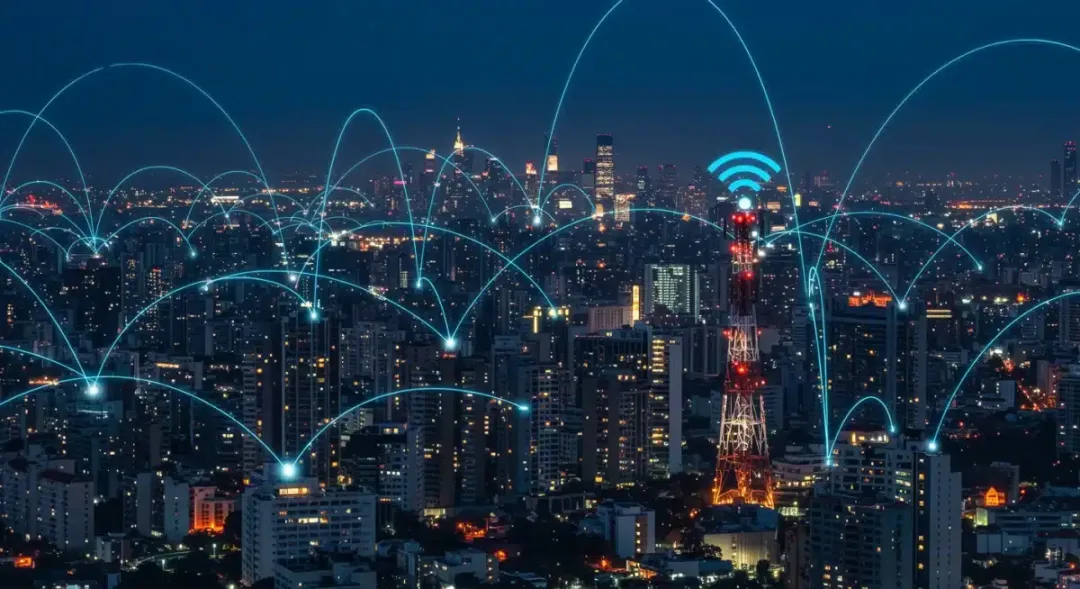
5G, the fifth generation of cellular technology, represents a monumental leap forward in mobile connectivity. It’s not just about faster downloads; it’s about a fundamental shift in how devices communicate, promising unprecedented speeds, ultra-low latency, and massive capacity. This technology is designed to power everything from our smartphones to smart cities and the burgeoning Internet of Things (IoT).
The core of 5G’s power lies in its ability to utilize a broader spectrum of radio frequencies, including sub-6 GHz and millimeter-wave (mmWave) bands. This expanded spectrum allows for a remarkable increase in data throughput and a significant reduction in network congestion. As 2026 approaches, 5G networks are becoming more ubiquitous, offering robust coverage in urban centers and expanding into suburban and rural areas, making it a viable primary connection for many users.
key characteristics of 5G connectivity
Understanding the distinct features of 5G is essential for appreciating its role in today’s and tomorrow’s digital ecosystem. These characteristics define its capabilities and limitations.
- High Speed: 5G offers theoretical peak speeds of up to 10 gigabits per second (Gbps), significantly faster than previous generations.
- Low Latency: With latency as low as 1 millisecond, 5G enables real-time applications like augmented reality (AR), virtual reality (VR), and autonomous vehicles.
- Massive Capacity: 5G networks can support a much higher density of connected devices per square kilometer, crucial for IoT growth.
- Mobility: Designed for devices on the move, 5G provides consistent high-speed connections whether you’re walking, driving, or commuting.
The continuous rollout of 5G infrastructure by major carriers means that by 2026, its reach and reliability will be even greater. This widespread availability makes 5G an increasingly attractive option for those who require high-performance internet wherever they go, without being tethered to a fixed location. Its ability to handle large volumes of data with minimal delay opens up new possibilities for innovation across various industries.

exploring wi-fi 6E: the home network champion
Wi-Fi 6E, an extension of the Wi-Fi 6 standard, takes home and office wireless networking to the next level by introducing the 6 GHz frequency band. This new spectrum dramatically expands the available airwaves, alleviating congestion and interference issues that have plagued older Wi-Fi standards operating on the crowded 2.4 GHz and 5 GHz bands. It’s designed to provide unparalleled performance for devices within a local network.
The addition of the 6 GHz band provides a vast amount of contiguous spectrum, allowing for wider channels and less interference from legacy devices. This translates to significantly faster speeds and lower latency for compatible Wi-Fi 6E devices. It’s particularly beneficial in environments with many Wi-Fi networks, such as apartment buildings or dense office spaces, where channels often overlap and degrade performance.
advantages of wi-fi 6E in local environments
Wi-Fi 6E brings several key enhancements that make it the superior choice for fixed, local connectivity, especially in data-intensive applications.
- Dedicated Spectrum: The 6 GHz band is exclusive to Wi-Fi 6E, meaning no interference from older Wi-Fi devices, microwaves, or Bluetooth.
- Higher Throughput: It supports wider channels (up to 160 MHz), enabling multi-gigabit speeds for local file transfers and high-bandwidth applications.
- Lower Latency: Reduced congestion and improved efficiency lead to lower latency within the local network, ideal for gaming and real-time streaming.
- Increased Capacity: More available channels mean more devices can connect simultaneously without a significant drop in performance.
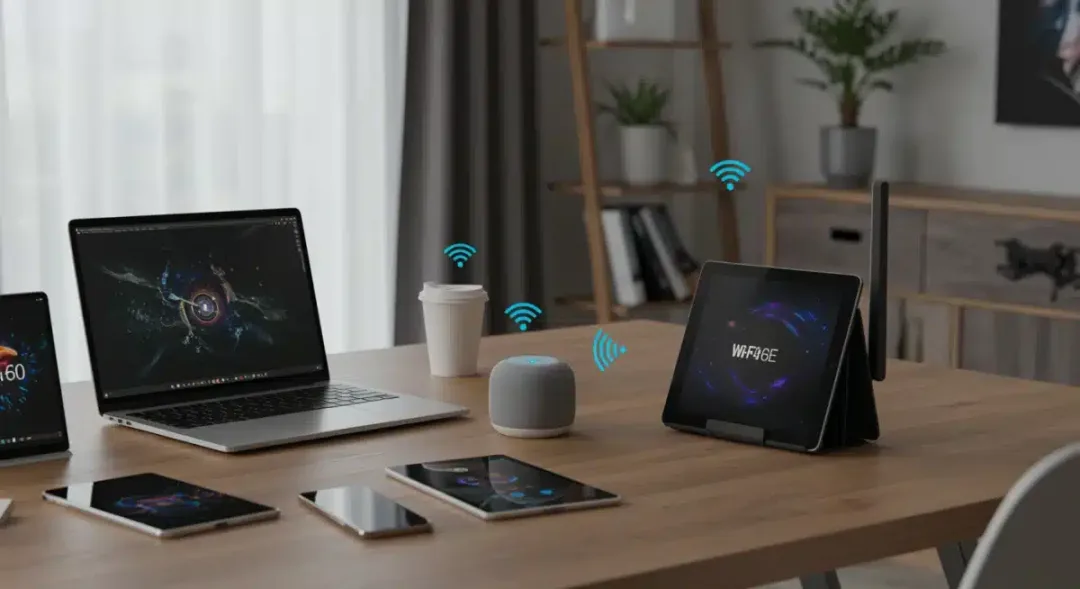
For households and businesses that rely heavily on numerous connected devices, such as smart TVs, gaming consoles, PCs, and smart home gadgets, Wi-Fi 6E offers a robust and future-proof solution. Its ability to manage high traffic volumes efficiently ensures a smooth and responsive experience for all users within its range. The dedicated 6 GHz band essentially creates a superhighway for your local network traffic.
speed and latency: a head-to-head comparison
When evaluating 5G vs. Wi-Fi 6E, speed and latency are often the most talked-about metrics, and rightly so, as they directly impact the user experience. Both technologies offer impressive performance, but their strengths lie in different scenarios due to their fundamental architectural differences.
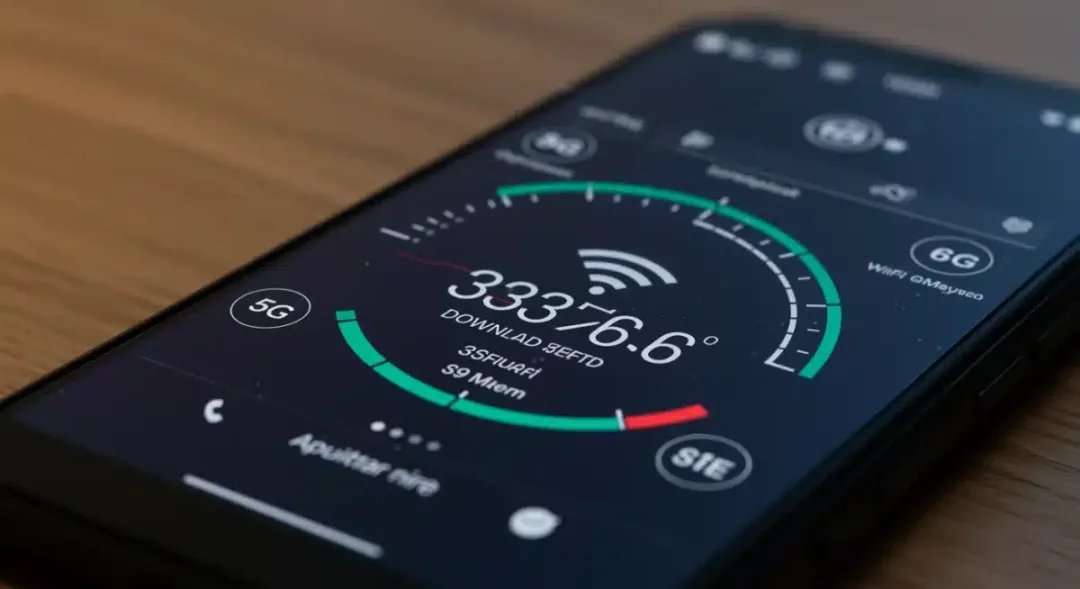
5G, particularly its mmWave implementation, can achieve theoretical peak speeds that rival or even surpass Wi-Fi 6E in optimal conditions. However, mmWave 5G has a limited range and is easily obstructed by physical barriers. Sub-6 GHz 5G, while more widespread, offers speeds that are generally comparable to, or slightly better than, high-end Wi-Fi 5 or Wi-Fi 6, but typically not the multi-gigabit speeds of Wi-Fi 6E on a local network. Latency on 5G is exceptionally low, making it excellent for applications requiring instant responses across a wide area.
real-world performance differences
Translating theoretical maximums into practical, everyday performance reveals where each technology truly shines. The environment and usage patterns play a significant role.
- 5G for Mobility: Provides excellent speeds and low latency for devices outside the home or office, offering consistent performance on the go.
- Wi-Fi 6E for Fixed Locations: Delivers superior, often multi-gigabit speeds and ultra-low latency within a local network, especially for stationary devices.
- Congestion Handling: Wi-Fi 6E’s 6 GHz band is less prone to congestion than older Wi-Fi bands, whereas 5G’s performance can vary with network traffic and tower proximity.
For tasks like downloading large files to a laptop at home, Wi-Fi 6E will generally provide a faster, more stable connection. For streaming high-definition video on a smartphone while commuting, 5G is the clear winner. The critical distinction lies in the intended use case: 5G for wide-area mobile connectivity, and Wi-Fi 6E for high-performance local area networking. Both excel in their respective domains, providing a powerful toolkit for modern connectivity needs.
range and coverage: where do they stand?
The physical reach and reliability of connectivity are paramount when deciding between wireless standards. Both 5G and Wi-Fi 6E have distinct characteristics concerning range and coverage, which directly influence their suitability for various applications.
5G, being a cellular technology, is designed for wide-area coverage, extending across cities, towns, and increasingly into rural areas. Its infrastructure relies on cell towers, and its signal can travel significant distances, though performance varies based on frequency bands. mmWave 5G, while incredibly fast, has a very short range and is easily blocked by obstacles. Sub-6 GHz 5G offers broader coverage, penetrating buildings more effectively, but with lower peak speeds. The strength of 5G lies in its ability to provide internet access almost anywhere you have a cellular signal, making it ideal for mobile devices.
environmental impact on signal strength
Environmental factors heavily influence the practical range and effectiveness of both technologies, a crucial consideration for users.
- 5G Penetration: Sub-6 GHz 5G offers better building penetration than mmWave, which struggles with walls and dense foliage.
- Wi-Fi 6E Obstacles: The 6 GHz band used by Wi-Fi 6E is more susceptible to attenuation by walls and furniture compared to lower Wi-Fi frequencies, potentially reducing its effective range indoors.
- Interference: Wi-Fi 6E benefits from less interference on its dedicated 6 GHz band, providing a cleaner signal within its range. 5G can experience interference in crowded cellular environments.
Wi-Fi 6E, on the other hand, is a local area network technology. Its range is limited to a few hundred feet from the router, typically covering a home or small office. While its 6 GHz band offers superior performance, it also has a shorter range and is more easily obstructed by walls and other physical barriers compared to older Wi-Fi bands (2.4 GHz and 5 GHz). For optimal Wi-Fi 6E performance, devices need to be relatively close to the access point. Therefore, 5G is the clear choice for connectivity on the go, while Wi-Fi 6E is the powerhouse for fixed, indoor environments.
cost and accessibility in 2026
The financial aspect and ease of access are significant factors for consumers and businesses alike when adopting new technologies. By 2026, both 5G and Wi-Fi 6E will have matured considerably, making them more accessible, but their cost structures and deployment models remain distinct.
Accessing 5G typically involves a monthly subscription plan from a mobile carrier, with costs varying based on data allowances and speed tiers. While 5G-compatible devices were initially more expensive, by 2026, they are largely standard across new smartphones, tablets, and even some laptops. The cost of 5G service itself has become more competitive as carriers expand their networks and vie for subscribers. However, unlimited high-speed 5G data plans can still be pricier than traditional home internet services.
device compatibility and infrastructure investment
The investment required for devices and infrastructure differs between the two technologies, influencing overall adoption and user experience.
- 5G Device Cost: Most new smartphones and many tablets and laptops will be 5G-ready by 2026, making device compatibility less of a barrier.
- Wi-Fi 6E Hardware: Adopting Wi-Fi 6E requires a compatible router or access point, and devices must also support the 6 GHz band. While prices for these have decreased, there’s still an upfront investment.
- Service Plans: 5G operates on a subscription model, while Wi-Fi 6E is part of your local network, meaning no additional monthly fees beyond your internet service provider (ISP) cost.
For Wi-Fi 6E, the primary cost is the initial purchase of a compatible router or access point. While these were premium items at launch, their prices have become more affordable, and many new laptops, smartphones, and smart home devices now include Wi-Fi 6E support. Once the hardware is in place, there are no recurring costs associated with the Wi-Fi 6E connection itself, beyond your standard internet service provider (ISP) fees. Businesses might invest in multiple Wi-Fi 6E access points for complete coverage. In essence, 5G is a utility-like service with ongoing costs, while Wi-Fi 6E is a hardware investment for a local, high-performance network.
use cases: when to choose which connection
The decision between 5G vs. Wi-Fi 6E isn’t about one being inherently superior; it’s about identifying the right tool for the right job. Both technologies excel in specific scenarios, and understanding these distinctions is key to optimizing your connectivity in 2026.
5G’s strength lies in its mobility and wide-area coverage. It’s the ideal choice for devices that are frequently on the move or require connectivity outside the confines of a home or office network. This includes smartphones, cellular-enabled tablets and laptops, and connected vehicles. For professionals who travel frequently or work remotely from various locations, 5G provides a consistent and high-performance internet experience. It’s also crucial for emerging applications like drone delivery, smart city infrastructure, and remote medical services where widespread, low-latency connectivity is essential.
optimizing connectivity for various devices
Different devices have varying connectivity needs, making a hybrid approach often the most effective strategy.
- Smartphones & Cellular Tablets: Primarily benefit from 5G for ubiquitous high-speed access.
- Laptops & Desktops: Best served by Wi-Fi 6E for sustained, multi-gigabit speeds at home or office, with 5G as a backup or for mobile use.
- Gaming Consoles & Smart TVs: Wi-Fi 6E provides the low latency and high bandwidth needed for seamless 4K/8K streaming and online gaming.
- Smart Home Devices: Many benefit from the stability and capacity of Wi-Fi 6E, especially those requiring consistent local communication.
Wi-Fi 6E, conversely, is the champion for fixed, indoor environments where multiple devices demand high bandwidth and ultra-low latency. This includes home networks with numerous streaming devices, competitive online gaming setups, virtual reality systems, and professional workstations handling large data transfers. In a smart home, Wi-Fi 6E can ensure that all connected appliances, security cameras, and entertainment systems operate smoothly without congestion. For businesses, it provides a robust backbone for internal networks, supporting high-density user environments and cloud-based applications. Ultimately, a combination of both technologies often provides the most comprehensive and flexible connectivity solution.
the future of connectivity: convergence and evolution
As we look towards 2026 and beyond, the narrative surrounding 5G vs. Wi-Fi 6E isn’t necessarily about a winner-take-all scenario. Instead, the trend points towards a more integrated and complementary relationship between these powerful technologies. The future of connectivity is likely to involve a seamless handoff and intelligent utilization of both, depending on the user’s location, device, and application requirements. This convergence will be driven by advancements in network intelligence and device capabilities.
Network slicing in 5G, for instance, allows for dedicated virtual networks tailored to specific applications, offering guaranteed performance levels. Simultaneously, Wi-Fi 7 (802.11be, or Extremely High Throughput) is on the horizon, promising even greater speeds and lower latency than Wi-Fi 6E, further solidifying the role of local wireless networks. The evolution of both standards will continue to push the boundaries of what’s possible, enabling new applications and experiences that are hard to imagine today.
hybrid approaches and intelligent networking
The most effective strategy for future connectivity will involve intelligently leveraging the strengths of both 5G and Wi-Fi 6E, often in a hybrid model.
- Automatic Network Switching: Devices will become smarter, automatically switching between 5G and Wi-Fi 6E based on signal strength, speed, cost, and application needs.
- Fixed Wireless Access (FWA): 5G will increasingly serve as a viable alternative to traditional wired broadband in homes and businesses, especially in underserved areas, competing directly with Wi-Fi routers connected to fiber or cable.
- Enterprise Solutions: Businesses will deploy private 5G networks alongside Wi-Fi 6E for specialized applications, ensuring optimal performance for different operational requirements.
The goal is to provide an uninterrupted, high-quality connection regardless of location or demand. This means devices will be designed to seamlessly transition between cellular and Wi-Fi networks without user intervention, ensuring optimal performance and efficiency. For example, a laptop might use 5G when outside the home and automatically switch to Wi-Fi 6E upon entering. This intelligent orchestration will create a truly pervasive and adaptive connectivity experience, making the ‘choice’ between 5G and Wi-Fi 6E less about a definitive selection and more about a dynamic interplay.
| Feature | Description |
|---|---|
| Mobility | 5G excels for on-the-go connectivity; Wi-Fi 6E is for fixed local networks. |
| Speed & Latency | Both offer high speeds/low latency, but 5G for wide-area, Wi-Fi 6E for local multi-gigabit. |
| Cost | 5G involves monthly carrier plans; Wi-Fi 6E is an upfront hardware investment for local use. |
| Use Case | 5G for outdoor/mobile; Wi-Fi 6E for high-density indoor environments. |
frequently asked questions about 5G and wi-fi 6E
What is the primary difference between 5G and Wi-Fi 6E?▼The primary difference lies in their scope: 5G is a wide-area cellular network designed for mobility and broad coverage, whereas Wi-Fi 6E is a local area network standard optimized for high-speed, low-latency connectivity within a limited physical space like a home or office.
Can Wi-Fi 6E replace 5G for all my devices?▼No, Wi-Fi 6E cannot replace 5G for all devices, especially those requiring connectivity outside a local network. While Wi-Fi 6E offers superior performance indoors, 5G provides essential mobile connectivity for smartphones, tablets, and other devices on the go.
Is 5G faster than Wi-Fi 6E?▼It depends. Millimeter-wave 5G can achieve similar or even higher peak speeds than Wi-Fi 6E but with limited range. Sub-6 GHz 5G is generally slower than Wi-Fi 6E in a local setting. Wi-Fi 6E often delivers more consistent multi-gigabit speeds within its confined range.
Do I need a new router for Wi-Fi 6E?▼Yes, to take advantage of Wi-Fi 6E’s benefits, you will need a Wi-Fi 6E compatible router or access point. This hardware supports the new 6 GHz frequency band, which is crucial for its enhanced speed and reduced interference capabilities.
Which is better for gaming, 5G or Wi-Fi 6E?▼For dedicated home gaming setups, Wi-Fi 6E is generally superior due to its ultra-low latency and high, stable bandwidth on a local network. 5G can be excellent for mobile gaming, but its latency and consistency can vary more depending on network conditions.
conclusion
Navigating the choice between 5G and Wi-Fi 6E in 2026 is less about declaring an outright winner and more about understanding their complementary roles in our increasingly connected world. 5G stands as the undisputed champion of mobile connectivity, offering unparalleled speeds and low latency across vast distances, essential for devices on the move and emerging wide-area applications. Wi-Fi 6E, on the other hand, solidifies its position as the powerhouse for fixed, local networks, providing dedicated high-bandwidth and ultra-low latency connections within homes and offices, perfect for demanding applications like 4K streaming, online gaming, and high-density smart device environments. The optimal approach for most users will involve a synergistic adoption of both technologies, leveraging 5G for its ubiquitous reach and Wi-Fi 6E for its localized performance. As connectivity evolves, intelligent devices and sophisticated network management will seamlessly orchestrate the best connection for every scenario, ensuring that whether you’re at home or on the go, your digital experience remains fast, reliable, and tailored to your needs.